A Weekend in Oslo, Norway
When a friend randomly asks, “Do you want to go to Norway next month?”, you say yes. And that’s how I ended up spending an impromptu weekend in Oslo last October. My only previous experience of the Nordic countries was a weekend in Copenhagen years ago. I’d definitely like to explore more of the region (it’s just rather expensive!), but a weekend in Oslo was a good taster for now.
We got very lucky with the weather, with two days of sunshine and only slightly more overcast on our last day. Going in mid-October meant short days and colder temperatures, but this was compensated for by gorgeous golden-hour lighting for much of the day! Flying direct from Edinburgh, we travelled out late on a Friday night and returned late the following Monday night. This gave us 3 full days to explore the city.
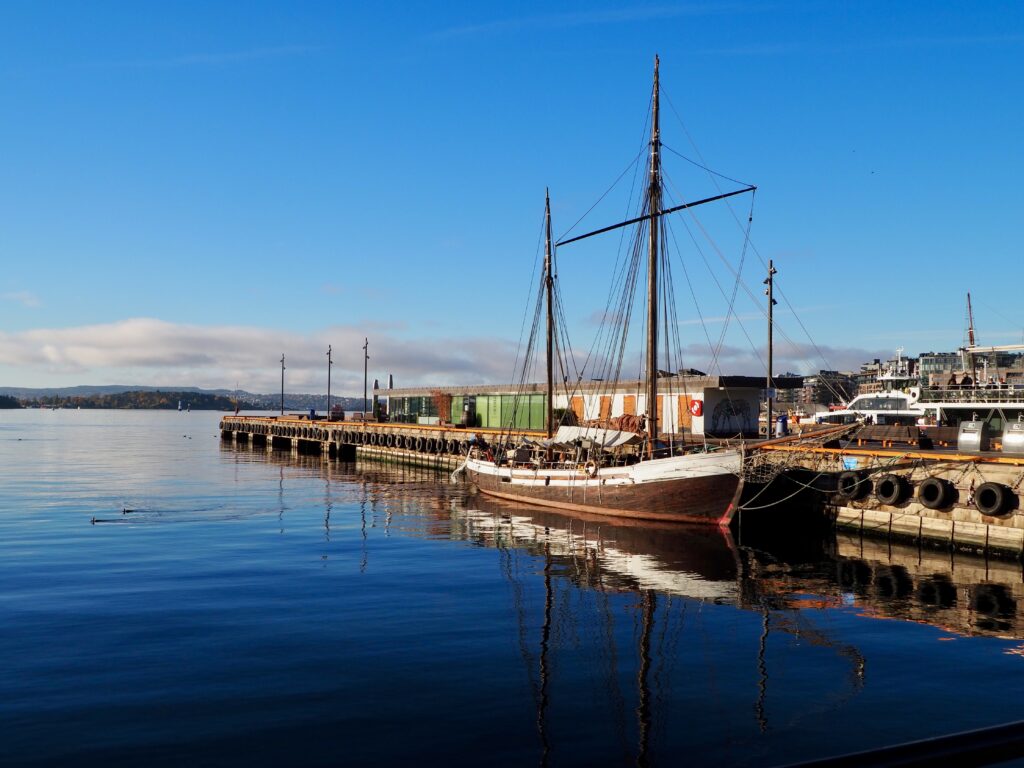
Day One
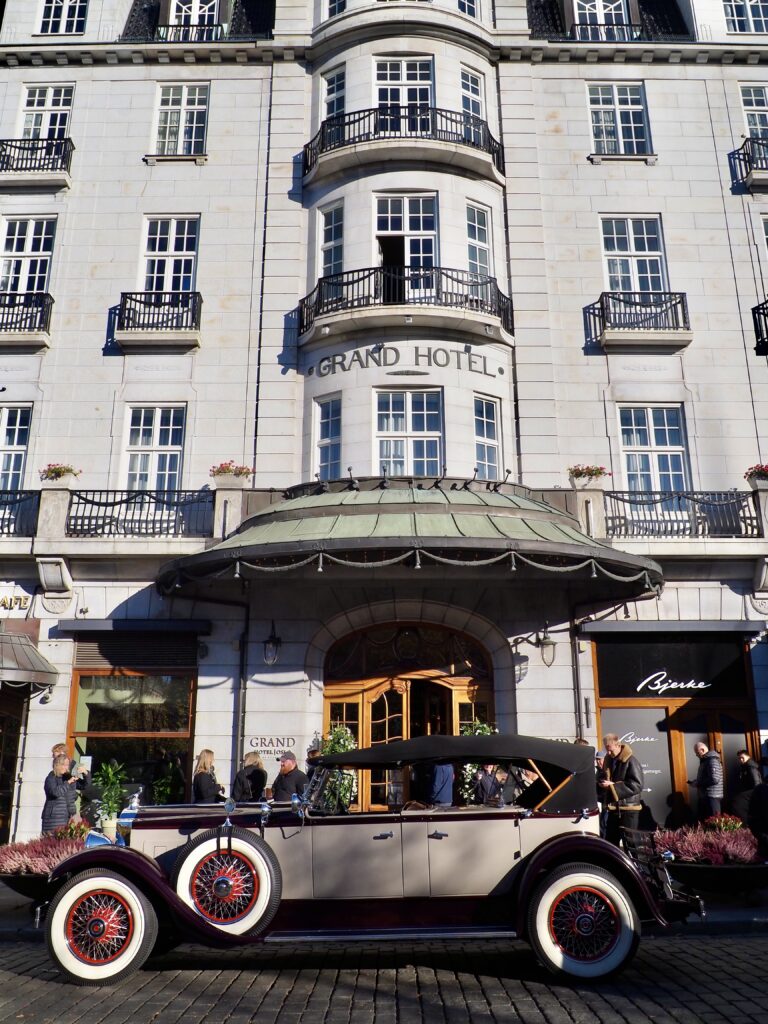
We spent our first night at an airport hotel due to our late flight. So, the first full day of our weekend in Oslo started with a train ride into the city centre. From there, it was a short walk to the hotel to store our luggage, then straight back out to explore. Oslo’s city centre is built along the waterfront of the Oslofjord, a massive inlet stretching to the south. It’s also a fairly compact area, so it’s easily walkable, though we did use a few buses over the course of the weekend.
Aker Brygge
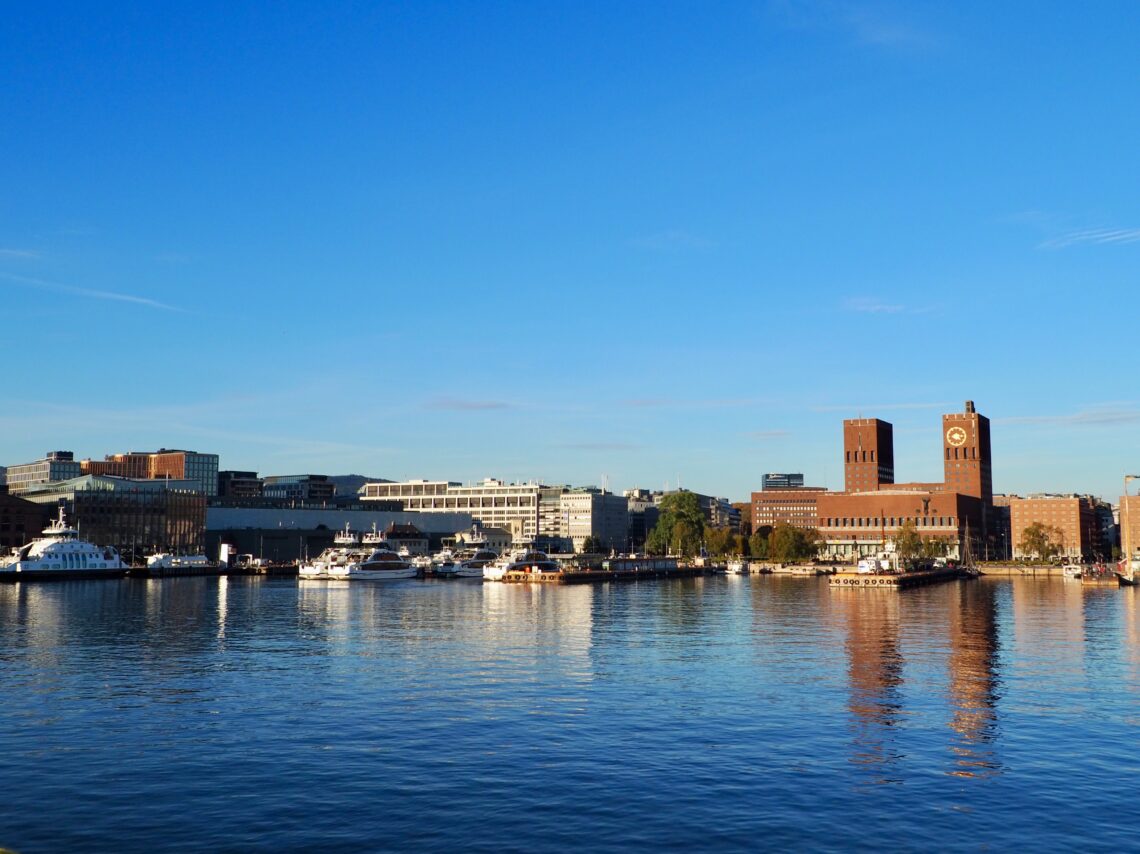
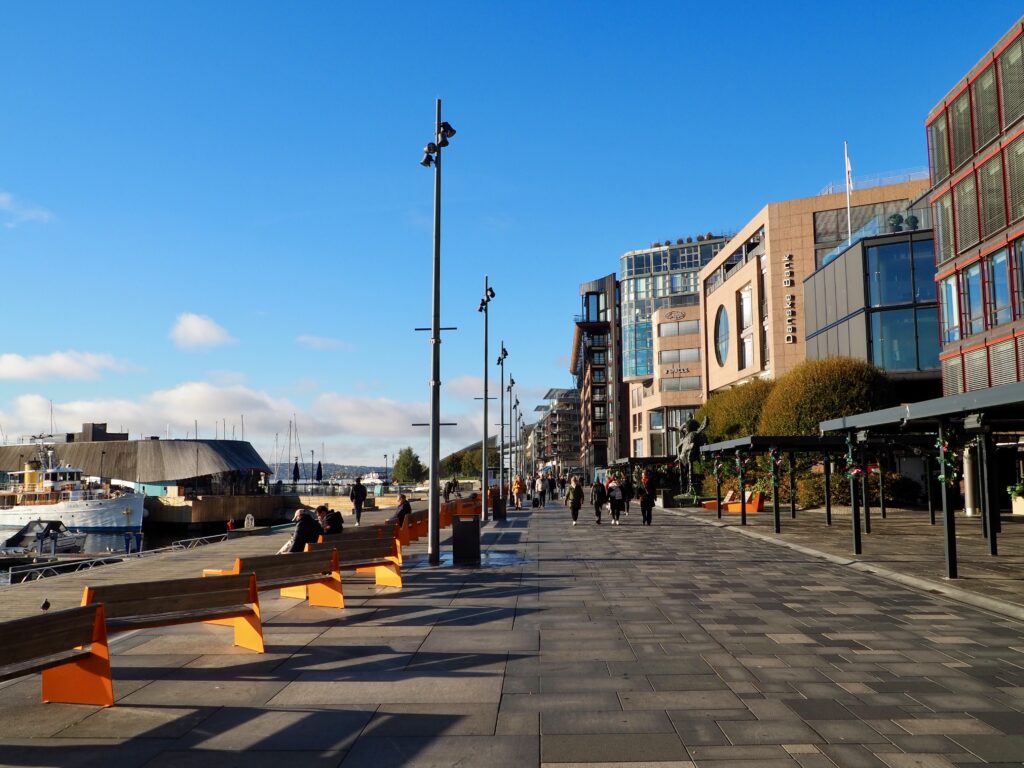
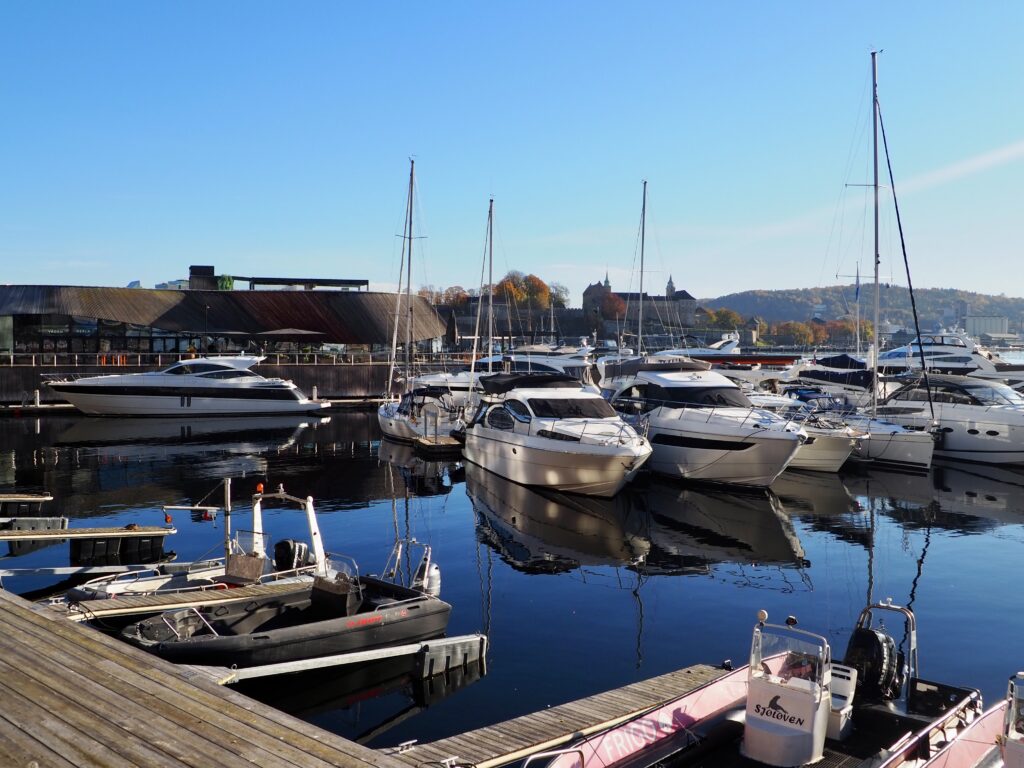
We wandered towards the main harbourfront, remarking on how clean, quiet and safe the streets felt. Down one side of the harbour is the district of Aker Brygge, with its pedestrian promenade lined with cafes and restaurants. We stopped for a morning coffee and snack at Kveitemjøl, a cafe that quickly became our favourite. Strolling in the sun, we passed moored boats along one side and modern steel and glass architecture on the other. We even spotted our first floating saunas, of which there are dozens more moored around the Oslofjord! Sadly, it was time of the month for both of us, so we skipped the saunas on this trip.
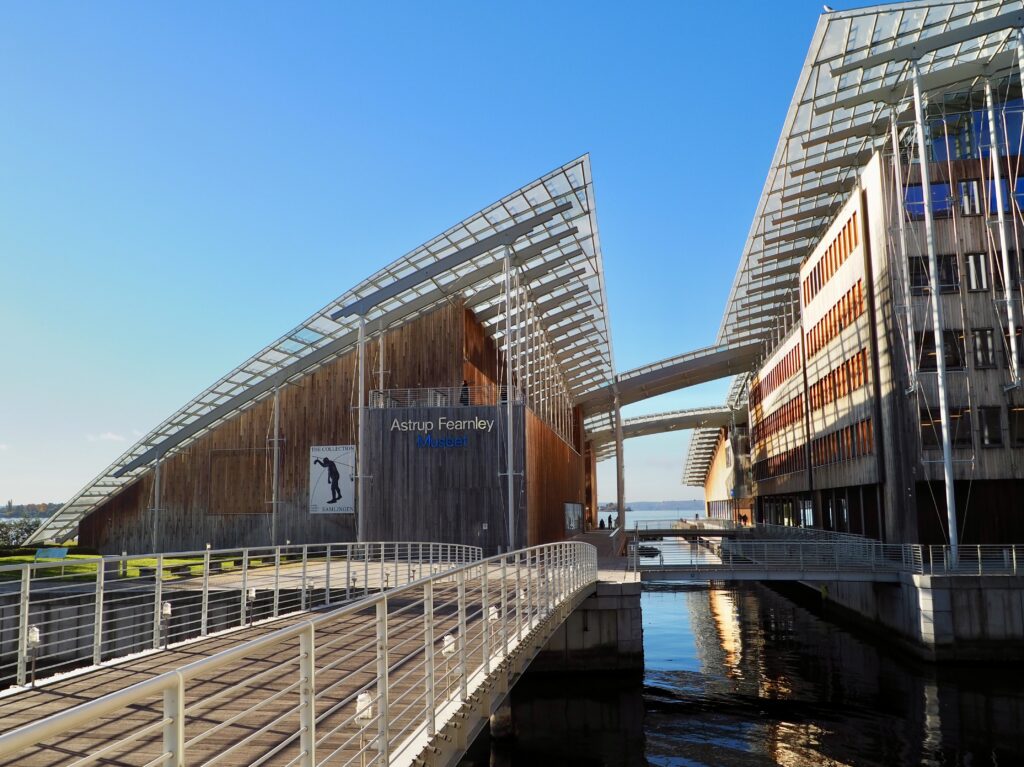
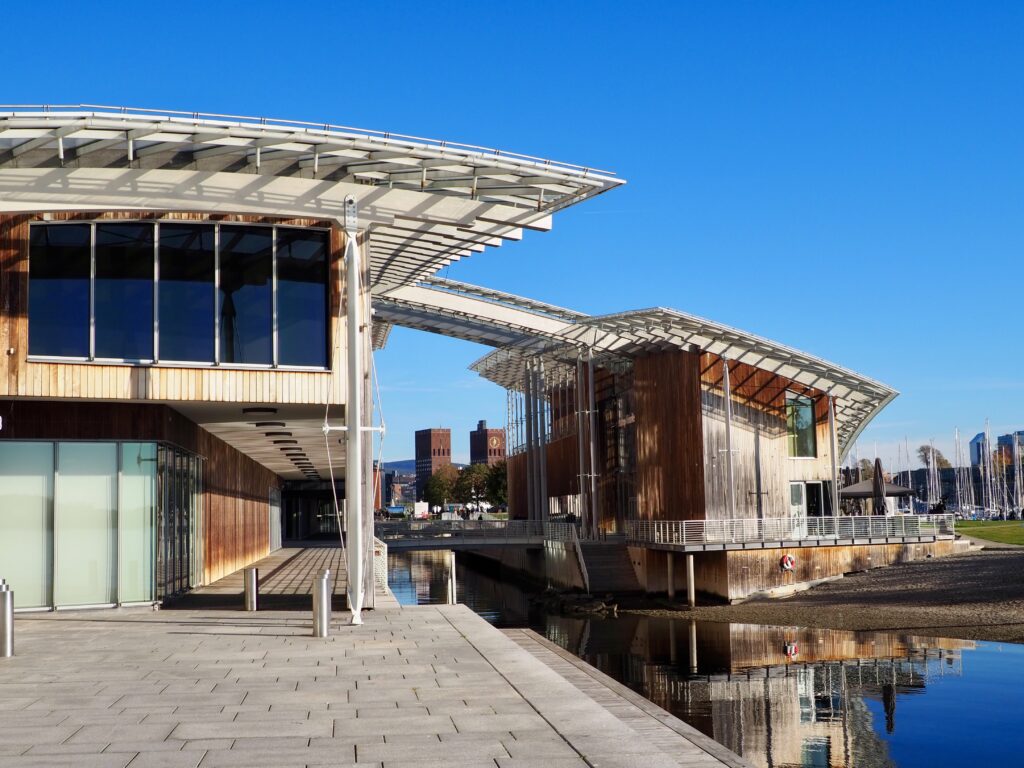
The National Museum sits at one end of the promenade, and the Astrup Fearnley Museum of Modern Art at the other. We didn’t enter either, but the latter was a cool building, which appears to float on the water. You can walk between its two structures to a small square right on the edge of the water, looking back at the building from the other side. I’m not always the biggest contemporary architecture fan, but I liked this one!
Free Walking Tour
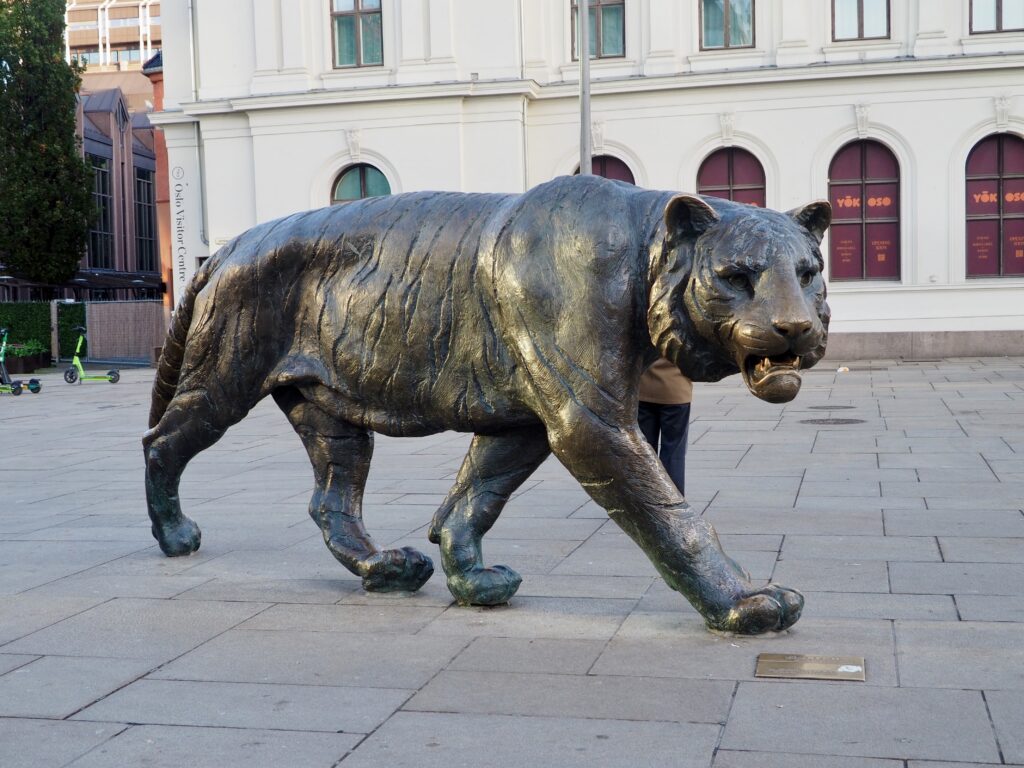
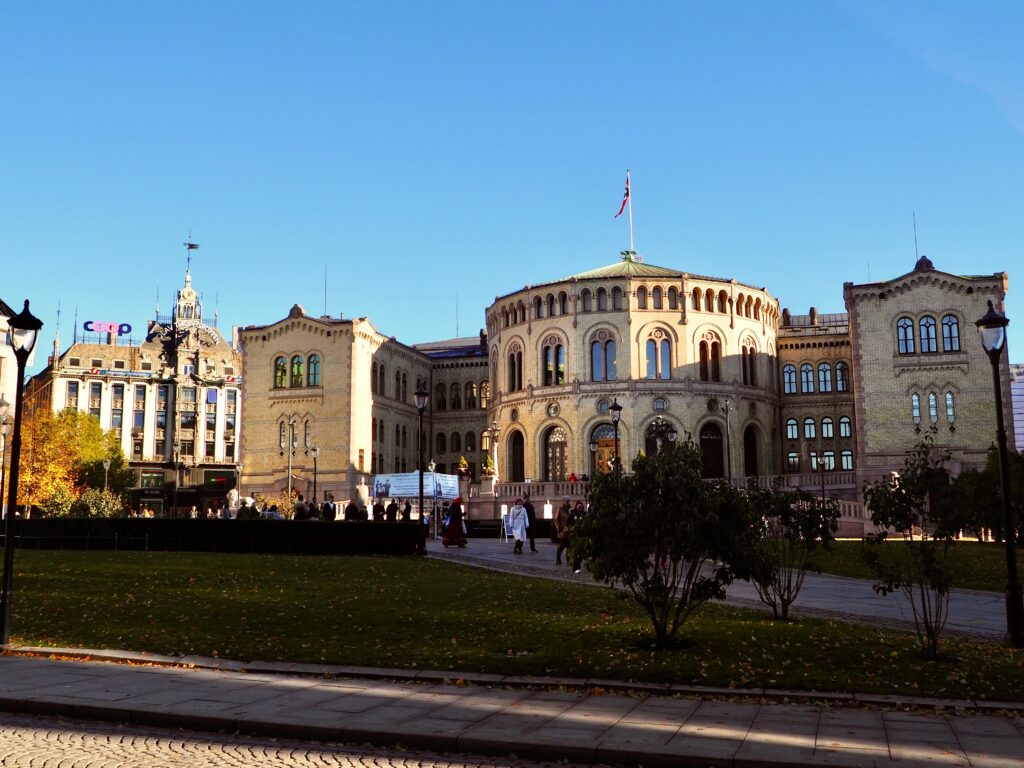
Retracing our route back up Aker Brygge, we headed to the meeting point for our free walking tour. Starting from the Tiger statue near the train station, the tour took us all around the city centre and harbourfront, finishing up opposite the Norwegian Parliament building. The first half was mostly focused on Norway’s history, which, honestly, I knew little about beyond Vikings. The guide focused on more recent history, including centuries of rule under Denmark or Sweden. Towards the end, he gave more recommendations for things to do and places to eat, helpful for the rest of our weekend in Oslo.
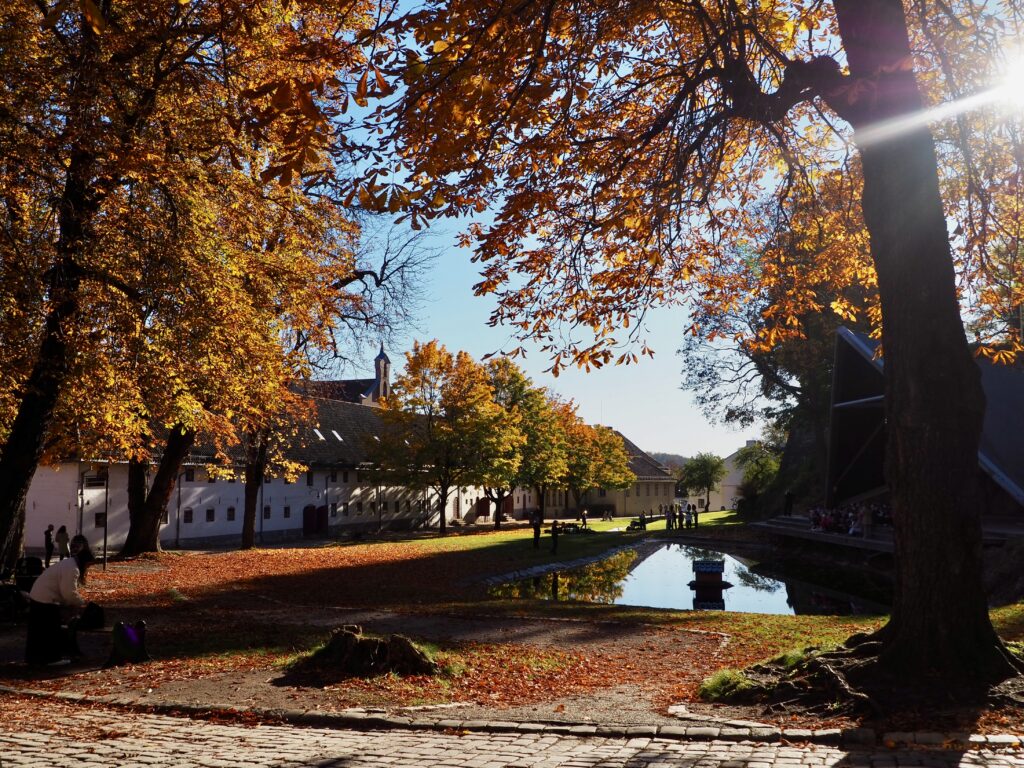
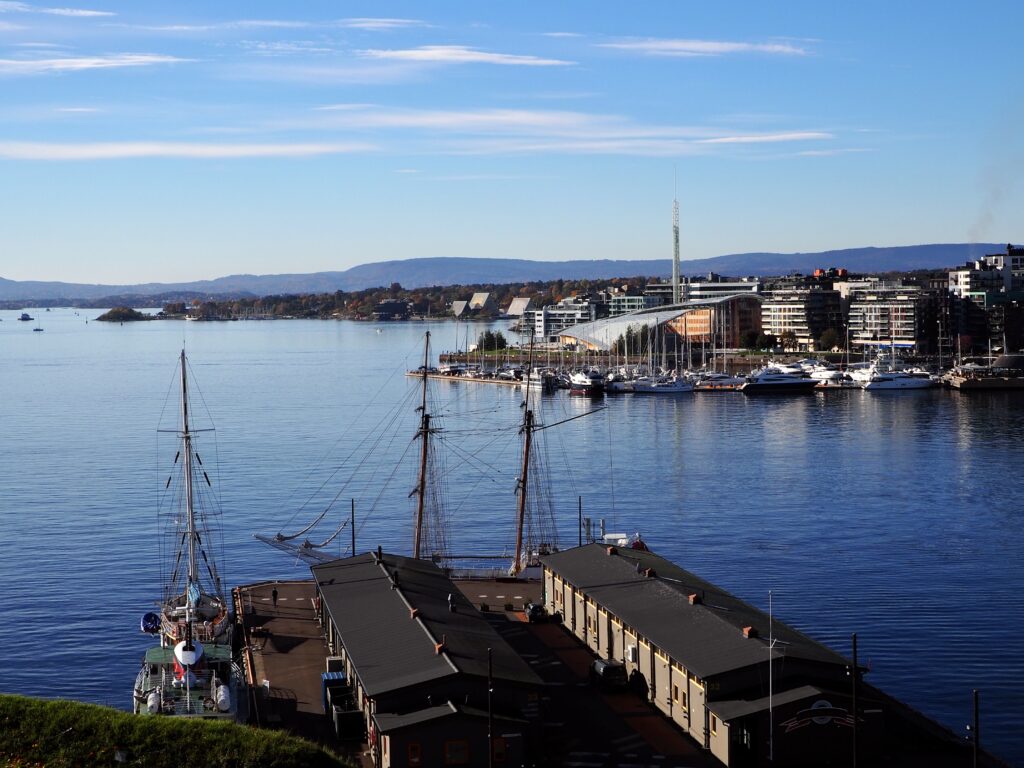
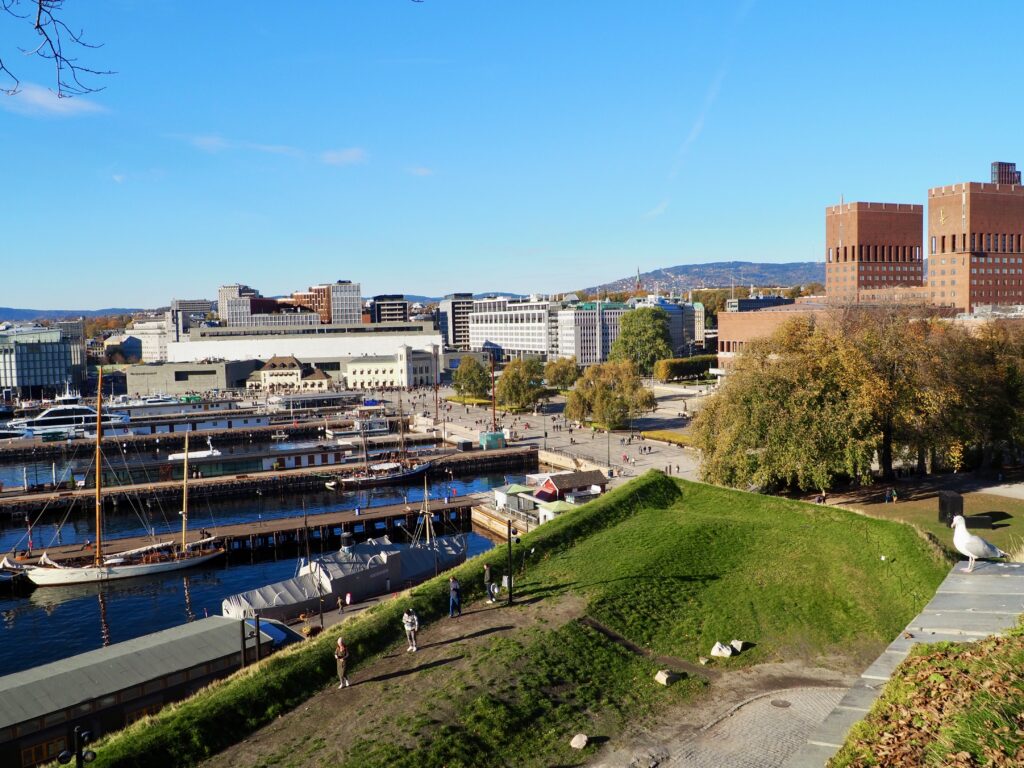
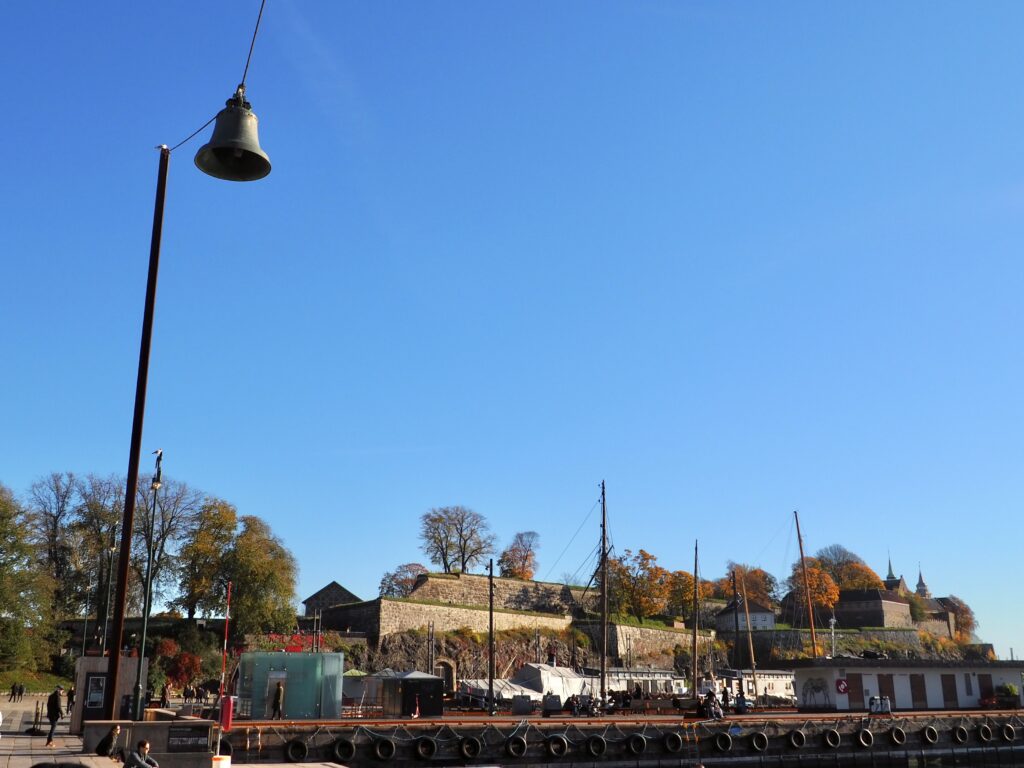
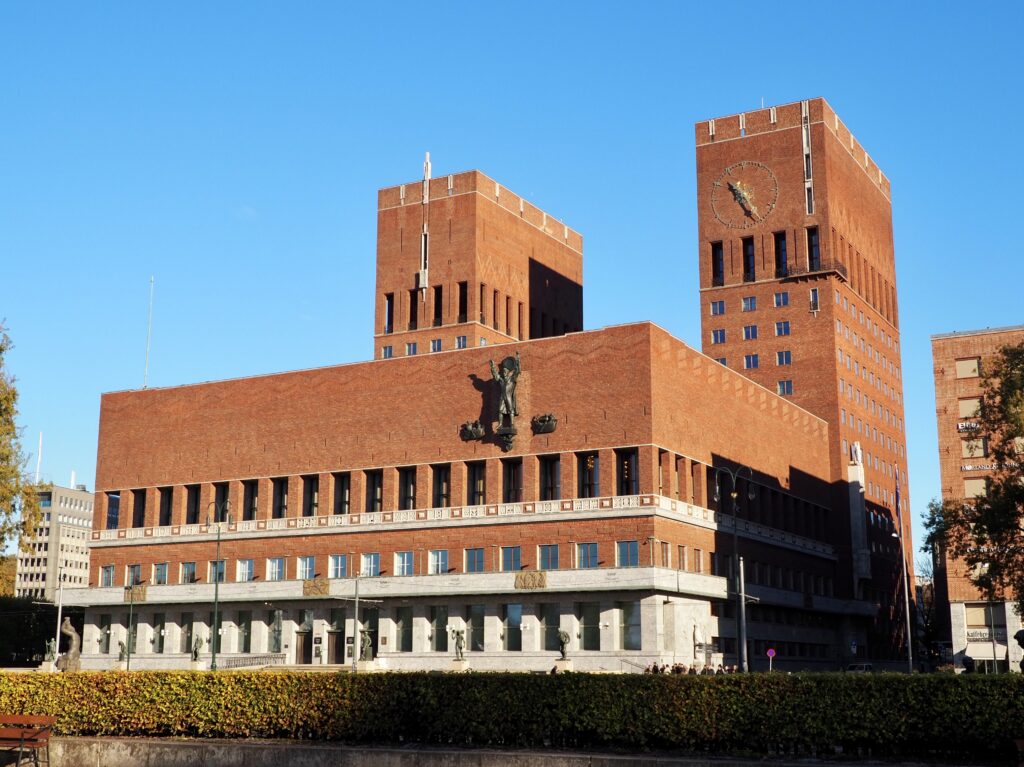
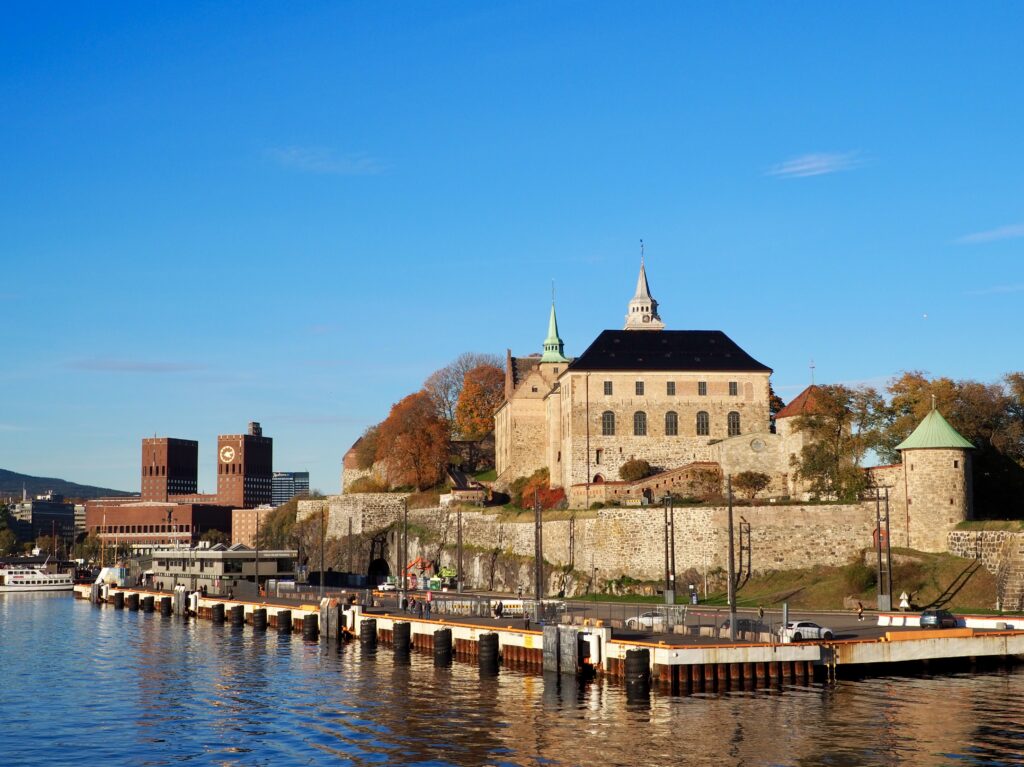
The tour also included a free visit to the Akershus Fortress, built in the 13th century. It sits high up on a hill near the waterfront, acting as an excellent watchtower for ships approaching up the Oslofjord. Or for tourists nowadays, a great viewpoint over the city and the fjord, especially on a sunny day like this! Back down the hill in the Rådhusplassen, he pointed out the Nobel Peace Centre and told us about City Hall. Then he showed us where to find the foot pedal that rings the Untuned Bell hanging overhead. I don’t think we’d have found it otherwise! The tour was fun and easy to follow, and we definitely got a good introduction to Oslo and Norwegian history.
Oslofjord Cruise
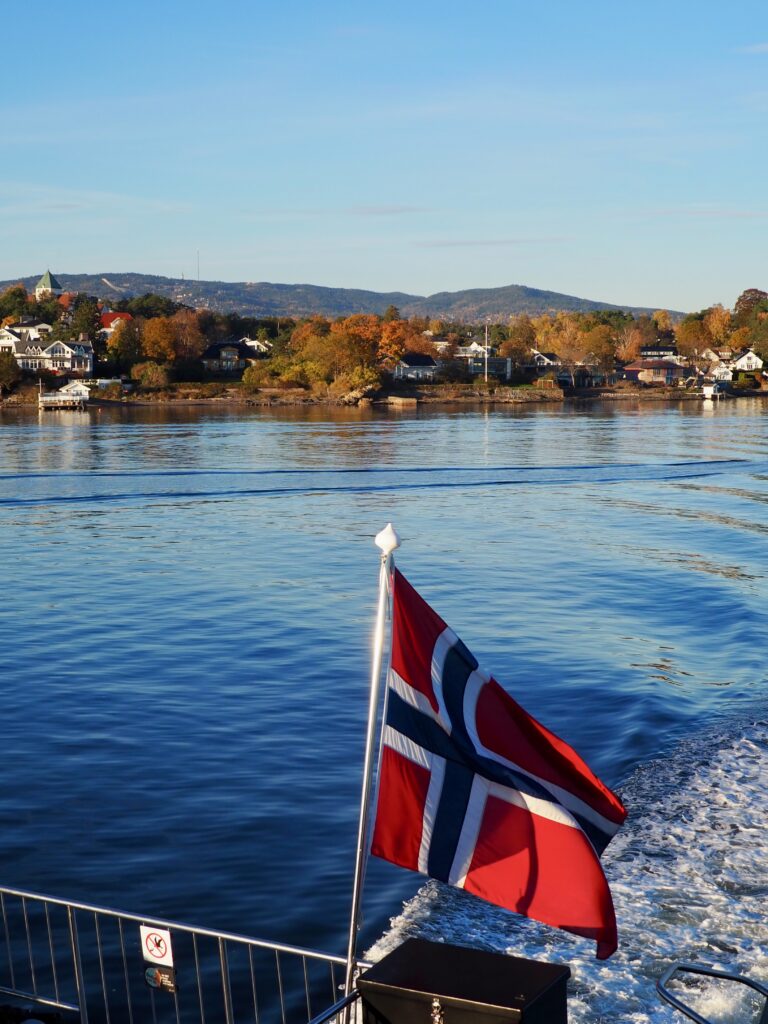
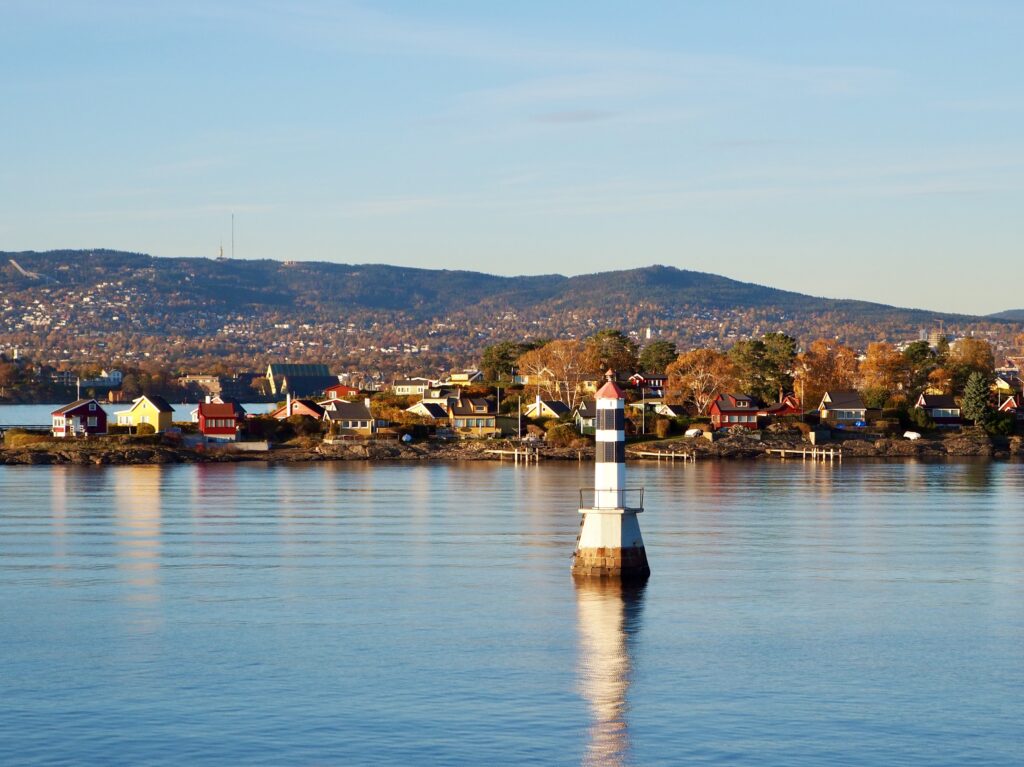
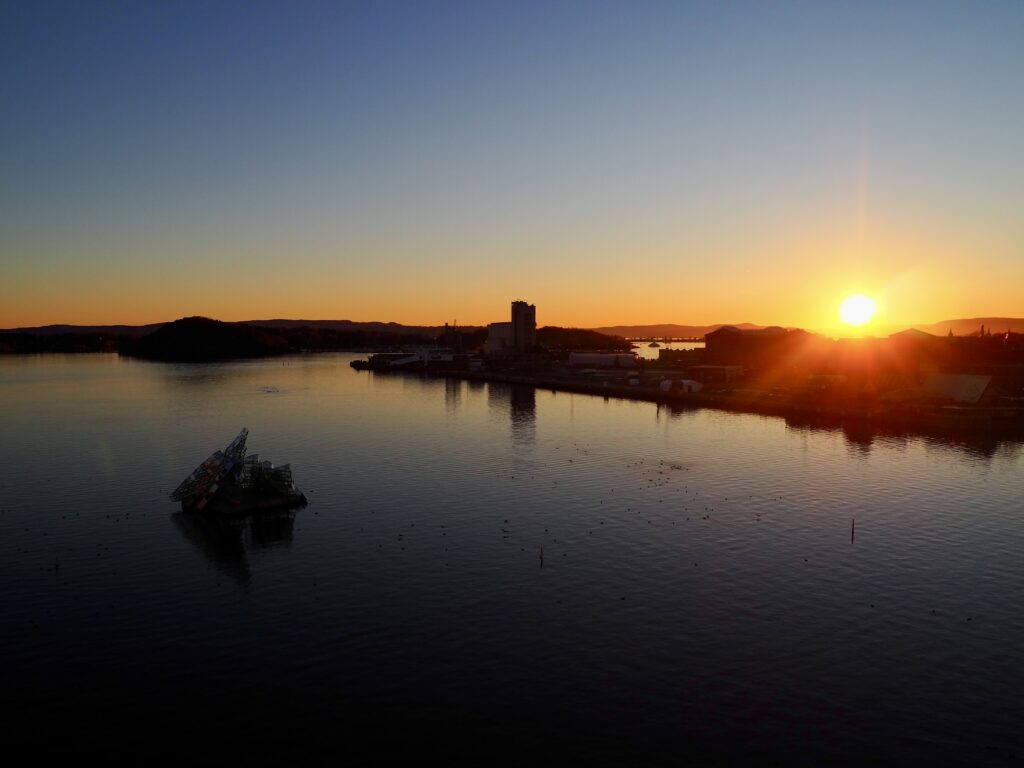
After a bite of lunch and checking into our room, we headed down to the pier to catch our cruise on the Oslofjord. This particular fjord isn’t as dramatic as those you see up the west coast of Norway, with the high cliff faces. But it offers views of the city from the water, and of the many islands scattered throughout it. We chose the late afternoon sailing to really make the most of the golden-hour sunset glow. The cruise also has on-board commentary, accessed via an app rather than being played out over speakers.
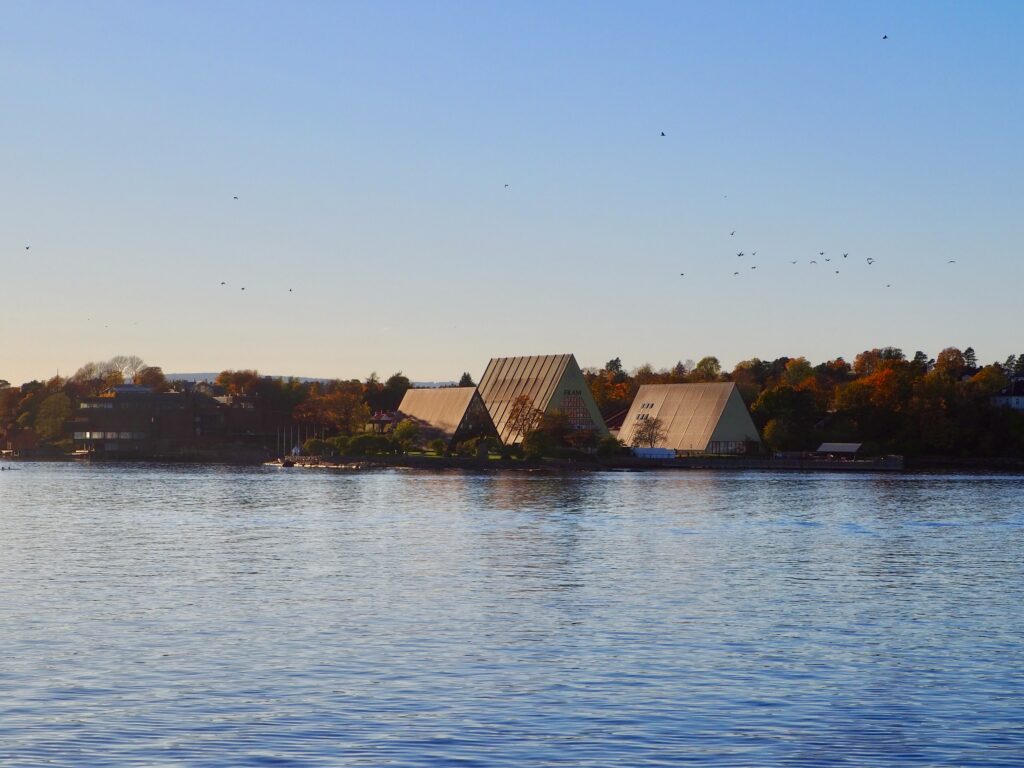
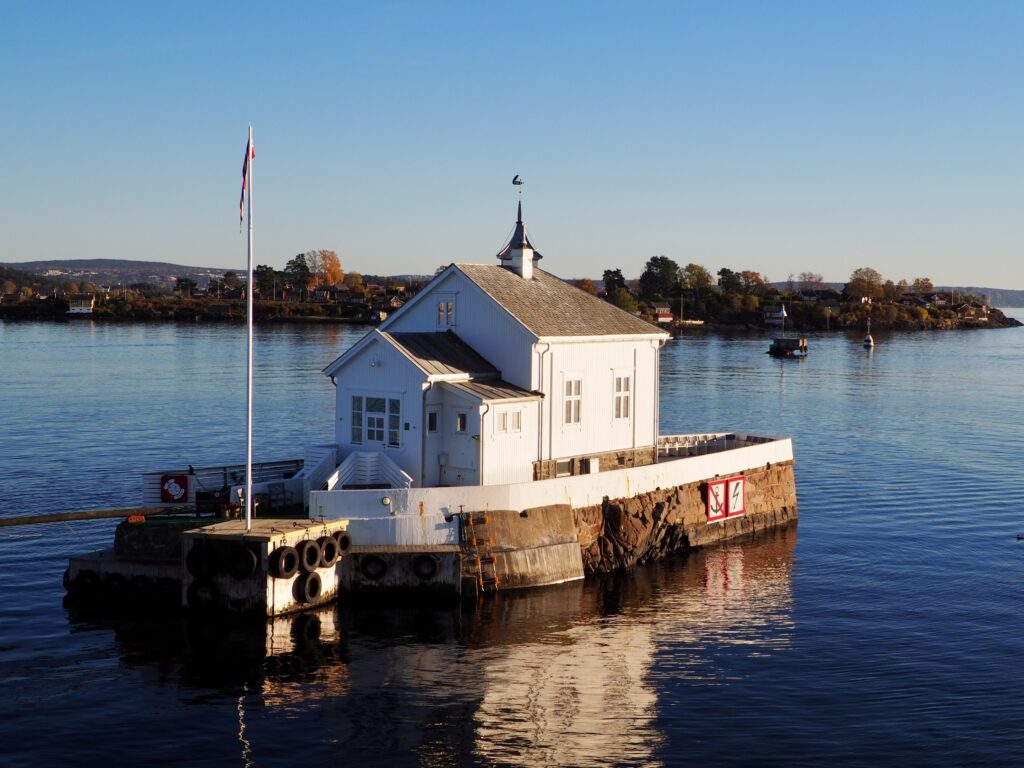
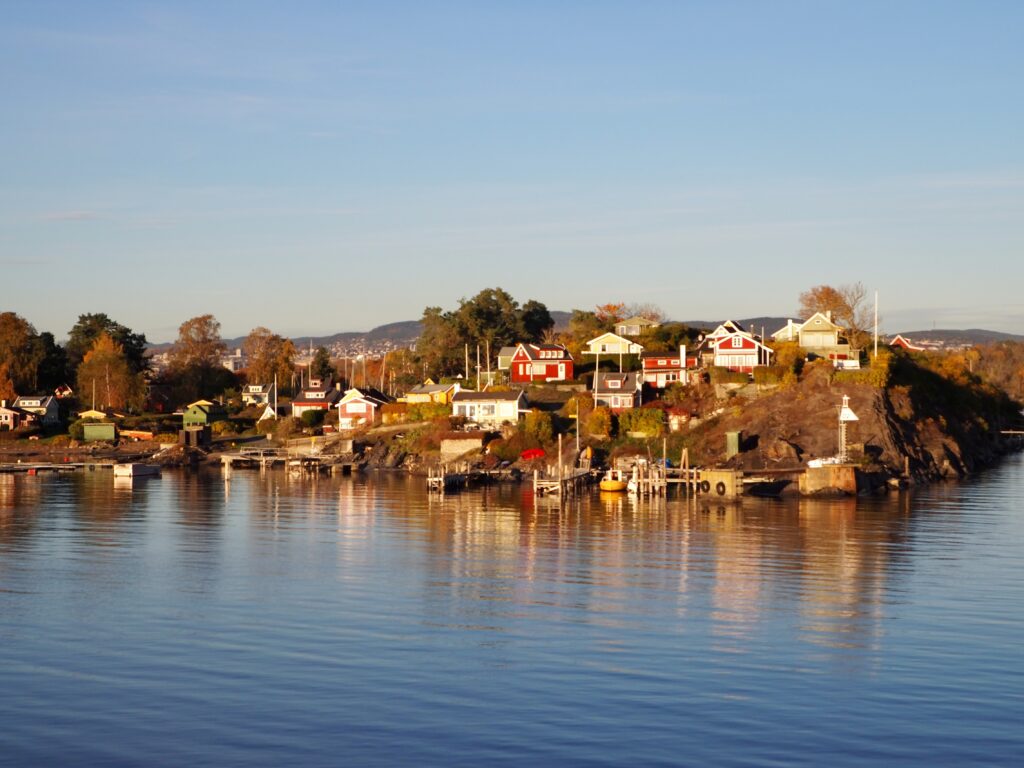
We spent most of our time on the top deck, soaking in the views. We’d seen a lot of the waterfront by this point, so I was excited to cruise between the islands where we were headed tomorrow. The cruise also went over towards the Bygdøy peninsula, where many of the museums are found. The triangular design of some of the buildings was striking to see from the water. However, my favourite thing by far was the tiny floating church off the shore of one of the islands. It was so cute and unique, and looked gorgeous in the evening sun. We headed inside for the return journey, to warm up again after being out in the cold autumn air.
Oslo Opera House
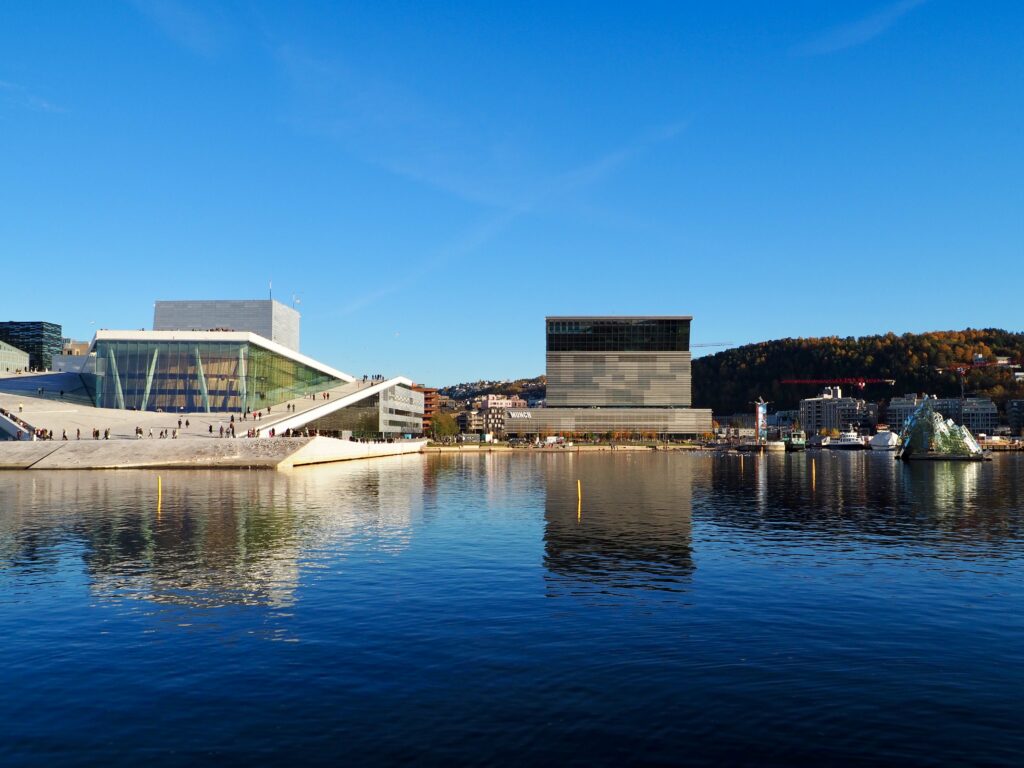
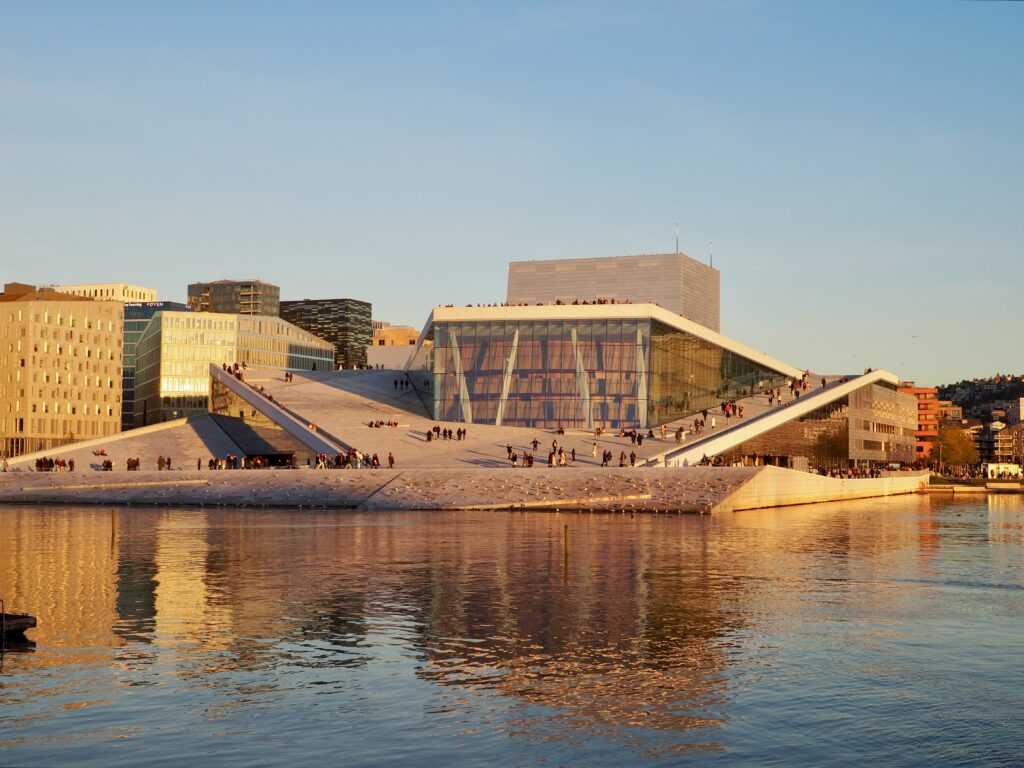
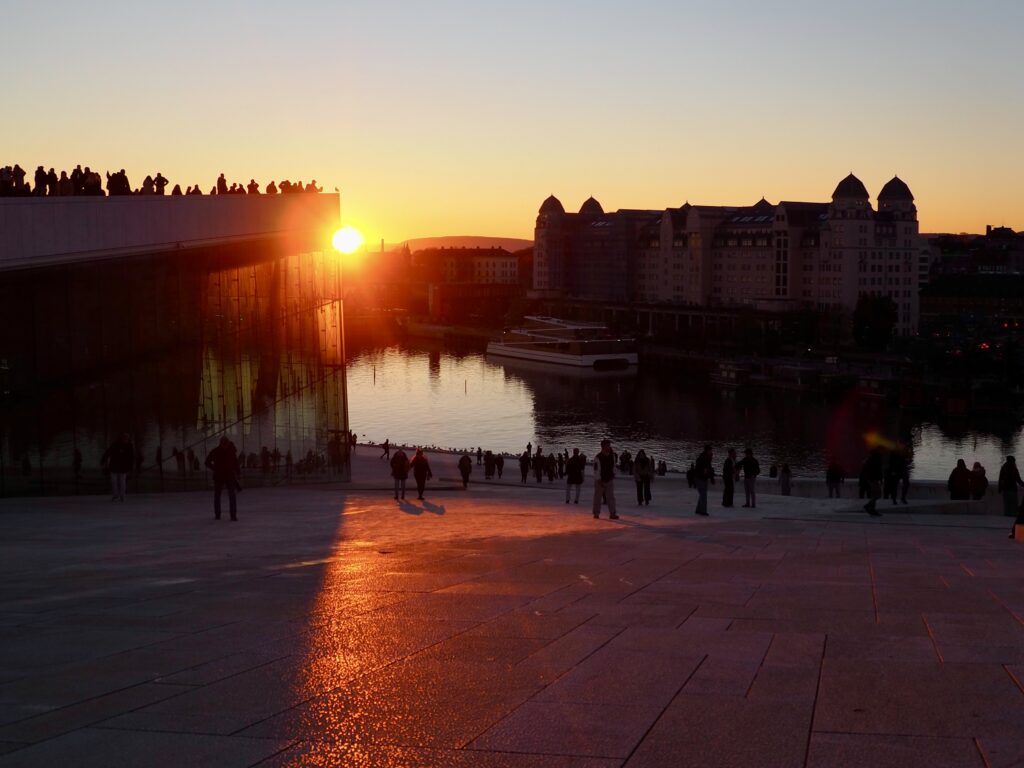
The cruise docked back on the mainland, opposite the Oslo Opera House. This was high on our list going into the weekend, and we decided sunset was the perfect time to visit. Not inside, though: the roof. The Opera House has an unusual cubic design, but with huge sloped ramps up the sides. The public can use these to access the roof space for free. The one downside of going late in the day is that the ramp was slick with ice, particularly in areas that had been in the shade for hours already! The first half was fine, and then it got super slidy, so we quickly retreated to the stairs on the edge for more stability. We saw many others do the same thing, and we wisely chose to return via the stairs as well!
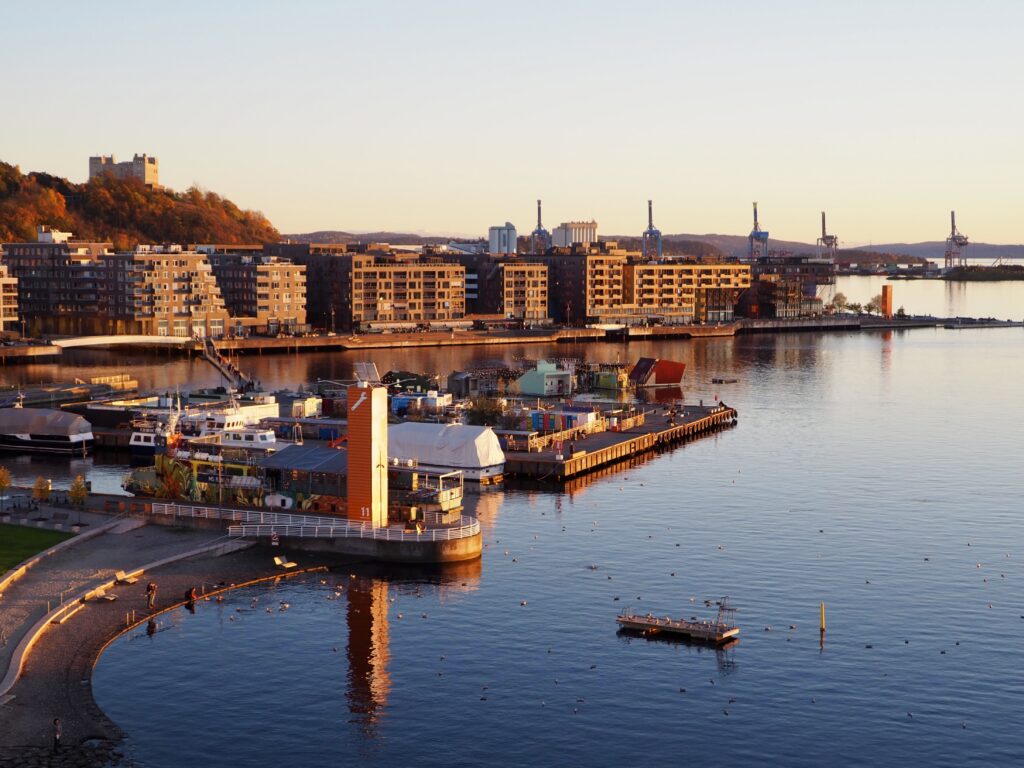
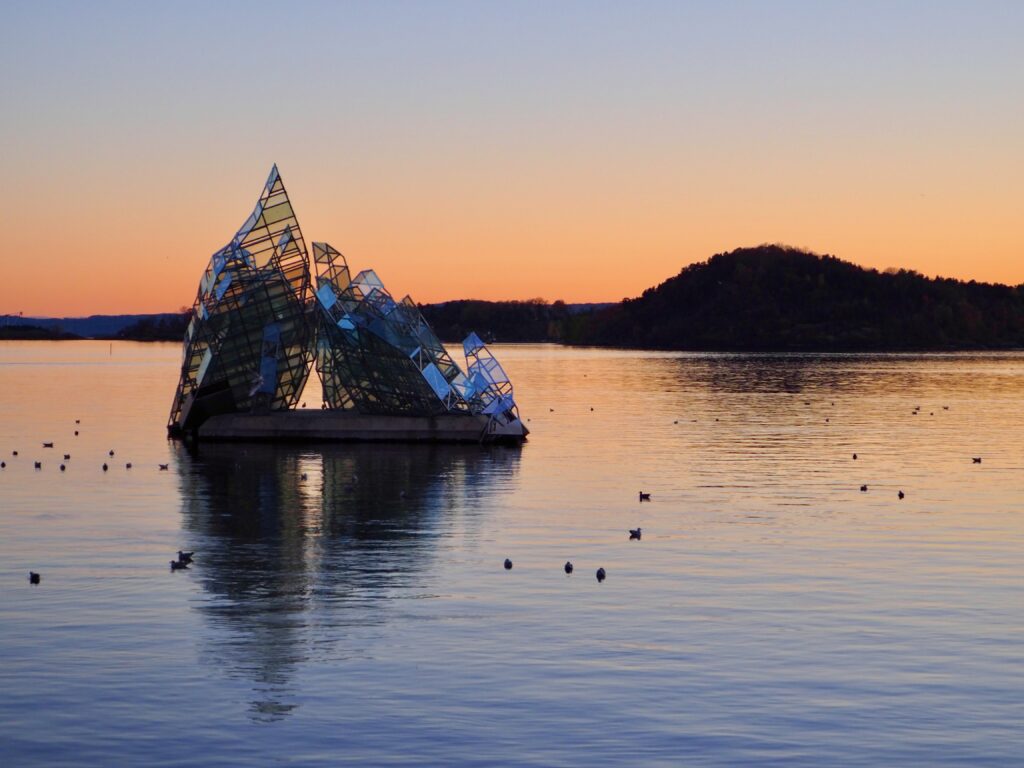
On the rooftop, we admired the Oslofjord, with more floating saunas dotting the harbour nearby. The sun was close to setting, casting the water in fiery hues as the city itself was plunged into a darkened silhouette. In the water in front of the Opera House, a floating glass iceberg bobs in place. It’s an art sculpture called ‘She Lies’. We’d glimpsed it earlier in the day but got a better view down at the base of the Opera House. I definitely think seeing it in the sunset glow was a good choice too!
Later that evening, we headed out for dinner at Barcode, a street food court with dozens of cuisine options and quirky seating areas. I don’t think Norway’s own cuisine is super well-known or popular! Our tour guide’s recommendations had mostly been for other types of food. Barcode had plenty of choices for a pair of vegetarians like ourselves, and we both really enjoyed it overall.
Day Two
The second day of our weekend in Oslo was mostly focused on nature and green spaces. While we’d seen the islands from yesterday’s cruise, today we were actually visiting some of them. From the Rådhusplassen, there are several piers that the Oslofjord ferries operate from, and they’re super cheap. The ferries are part of Oslo’s public transport network, along with the buses and trams, all operated by Ruter. So, you can use one app for all your tickets, which is easy to navigate. We picked up packed lunch supplies on the way, then had to run to catch our ferry, with the reduced Sunday timetable!
Hovedøya
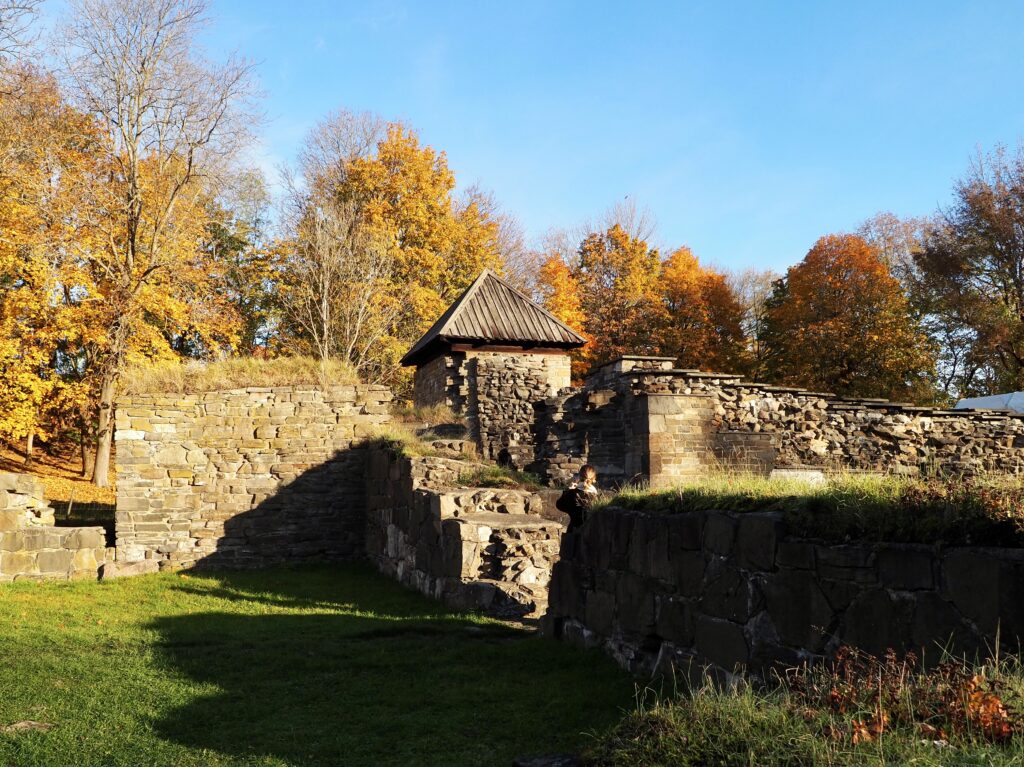
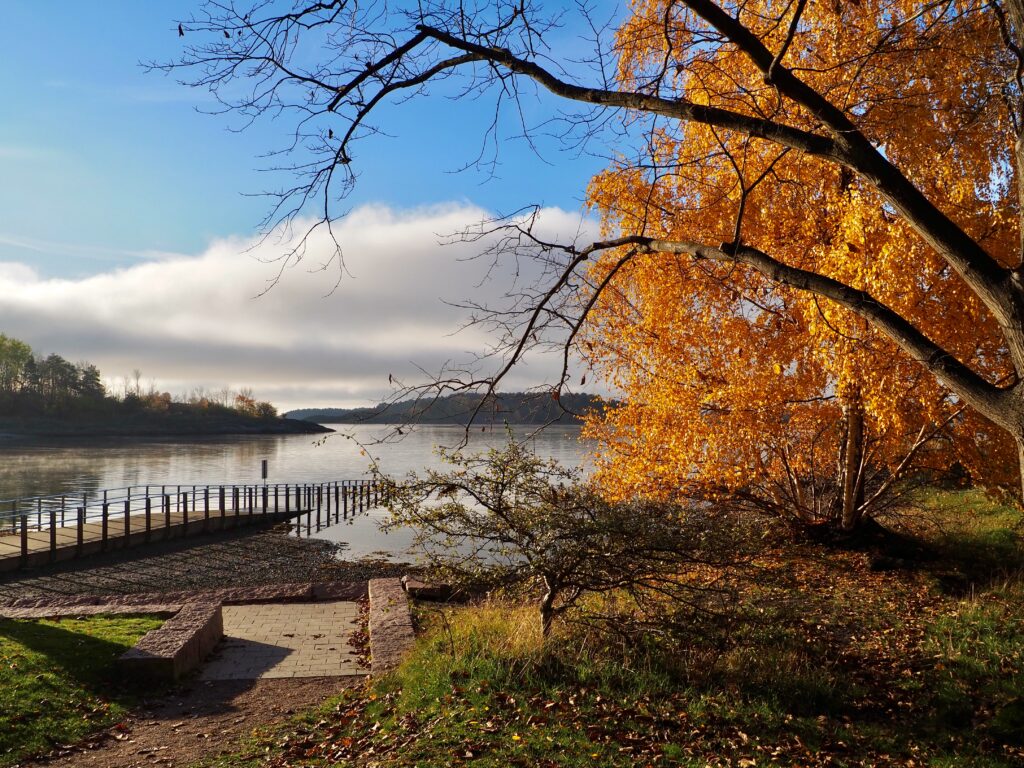
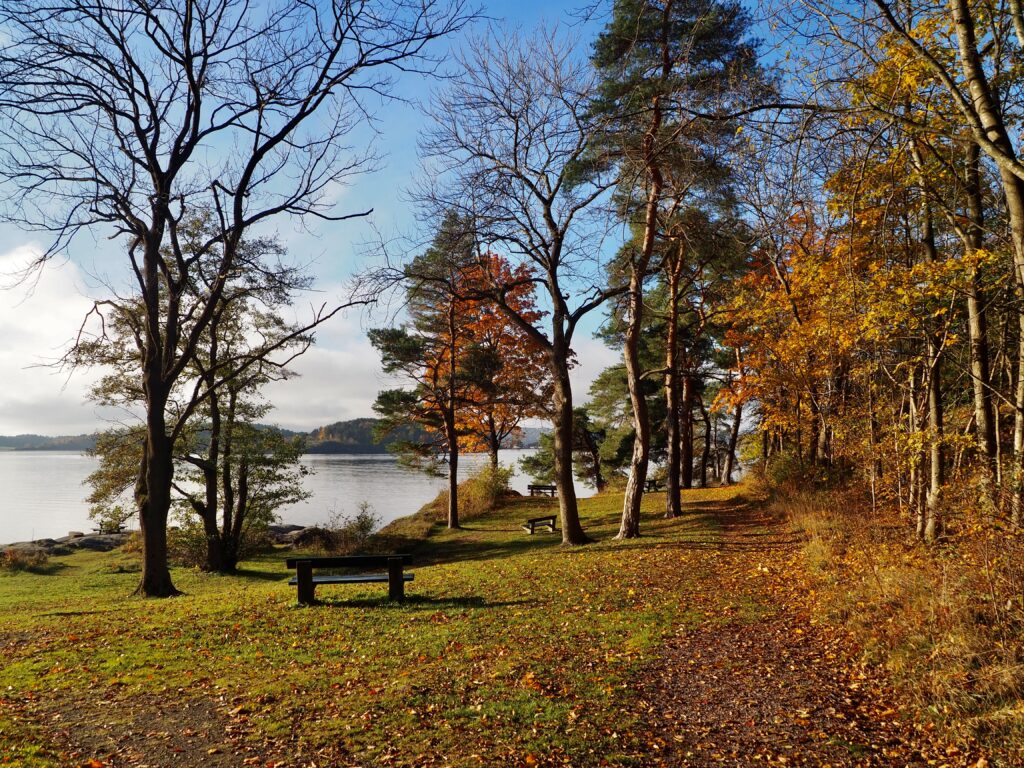
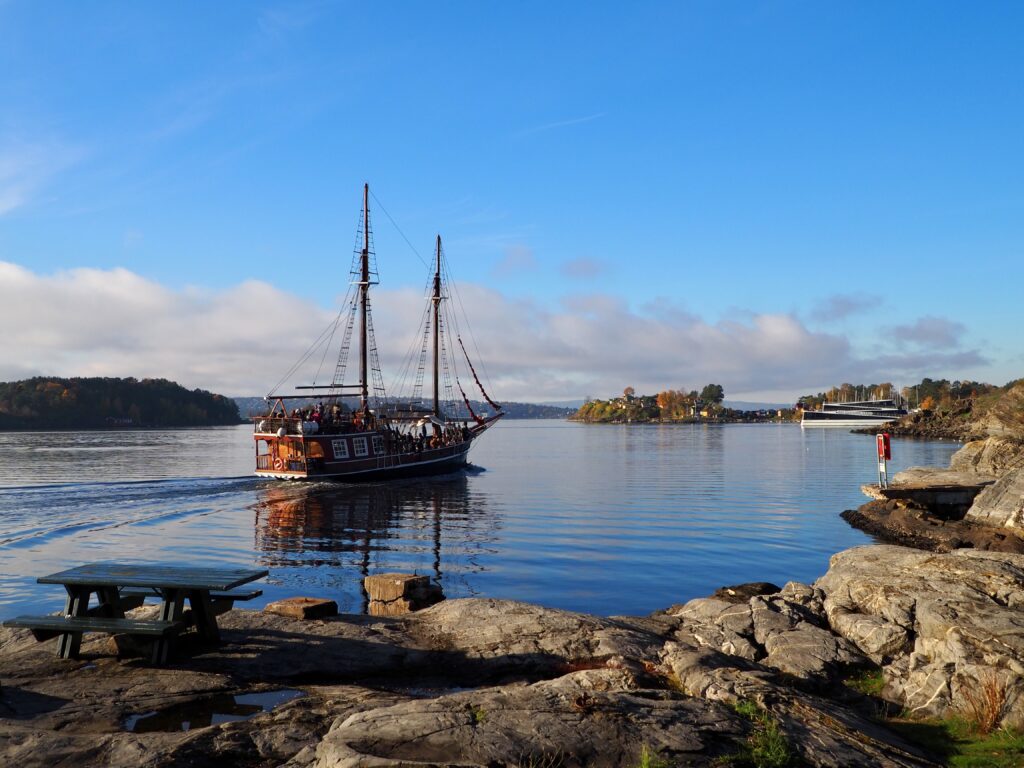
Just a few minutes later, we landed on our first island, Hovedøya. It’s essentially a public park, a small island covered in woodland and hiking trails. However, there have been inhabitants there in the past, as evidenced by the monastic ruins we visited first, wandering between the crumbling stone walls. The island was also a defensive site, with several cannon battery locations throughout. We ambled around the island, making a steady loop, which took in a few coastal viewpoints along the way. We particularly enjoyed finding ourselves on a rocky outcrop, admiring the neighbouring islands in the sun, when a tall ship came sailing past. It’s a regular harbour cruise, which I’d looked at as an option during my research before the trip (we decided against it due to the lack of indoor space for the cold). Many of the people on board waved at us as they passed!
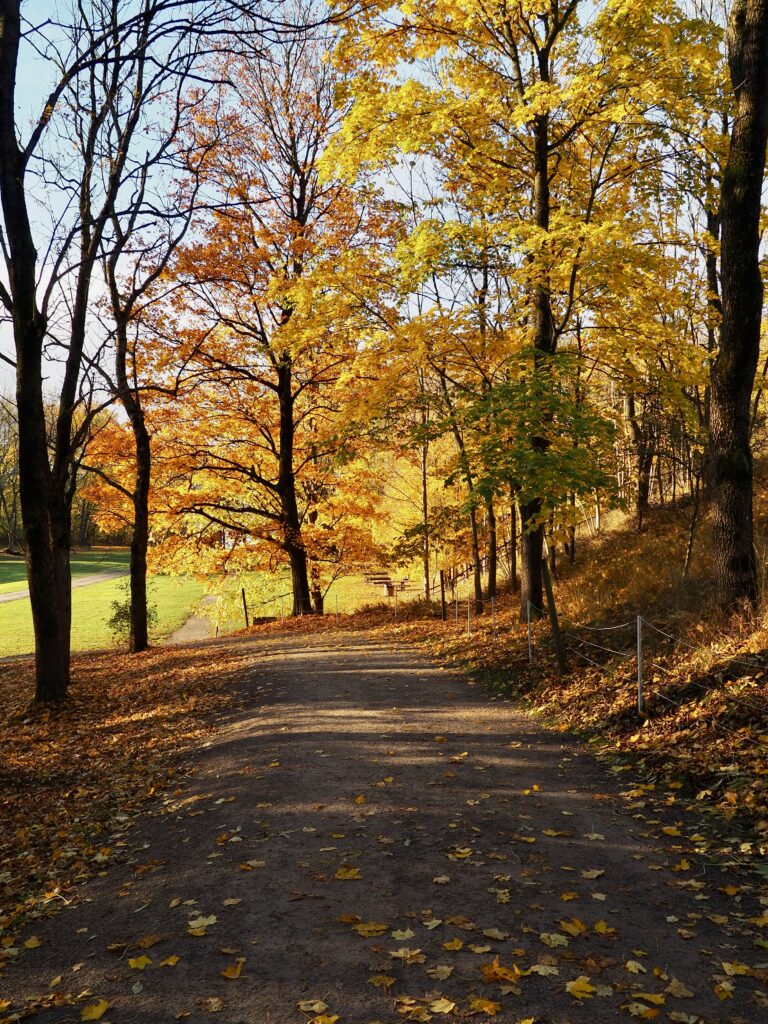
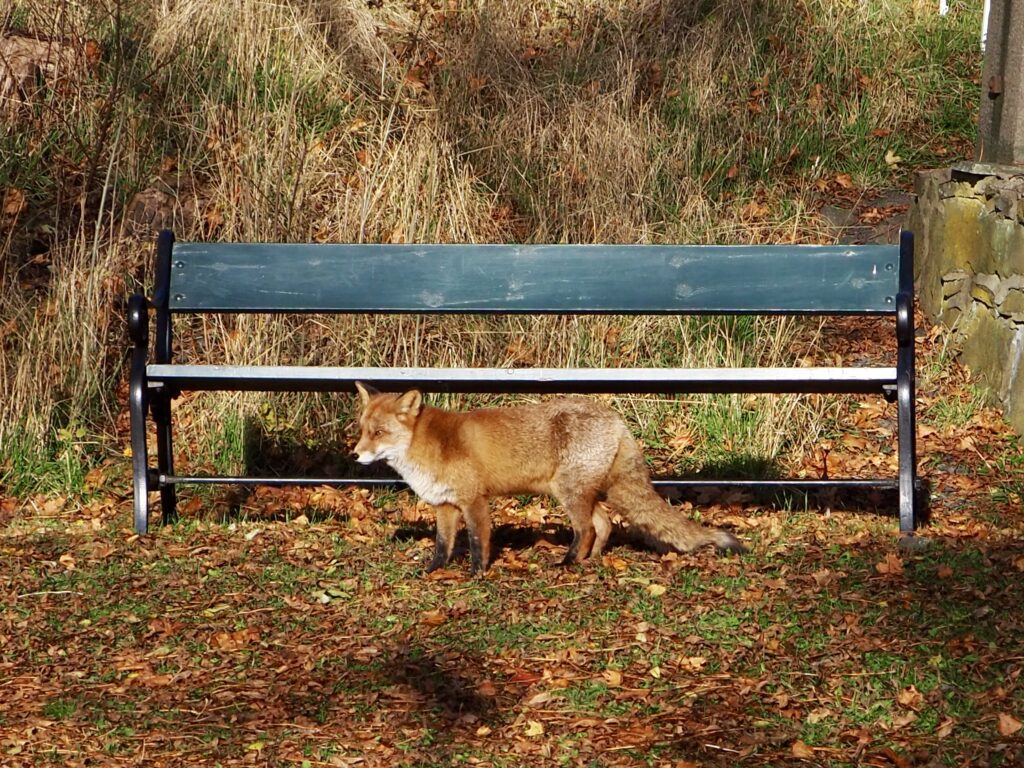
Away from the coast, the inland portions of our walk were no less beautiful. The autumn leaves were a riot of colours, with the golden sun filtering through them as they continued clinging on to the branches overhead. We also came across a woodpecker at one point. And then, as we were nearing the pier again for our next ferry journey, a small red fox ventured out from the forest. It sat at a distance from the path as a handful of tourists watched it, but eventually did get brave enough to come closer and dart across the path before disappearing again.
Lindøya
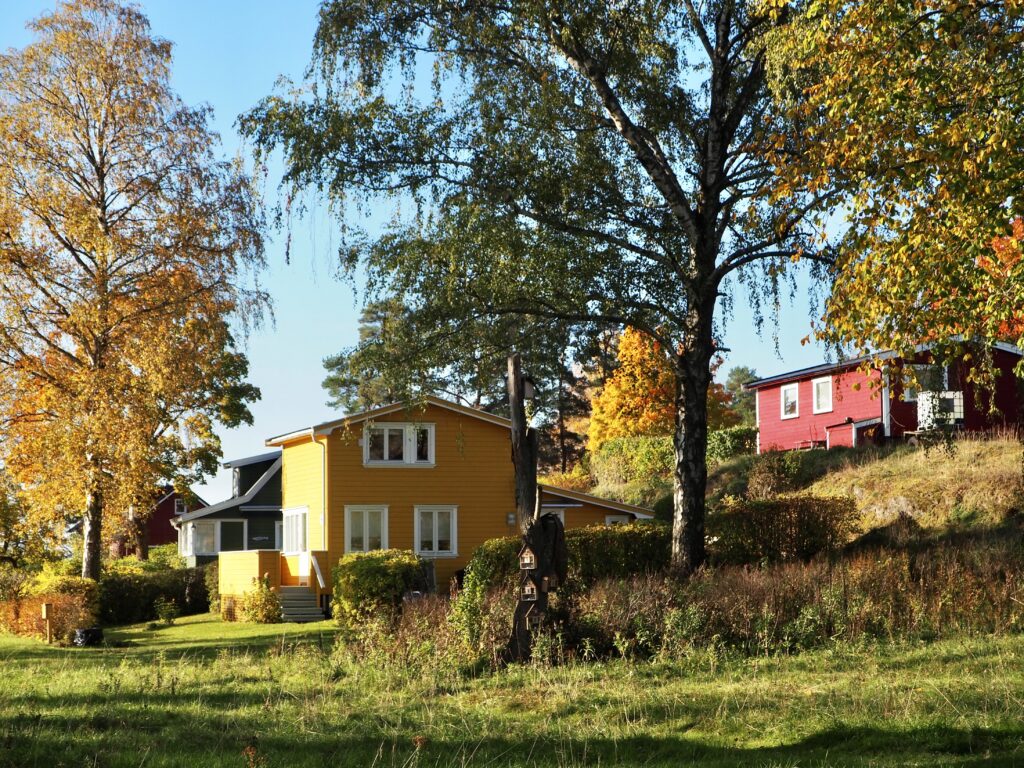
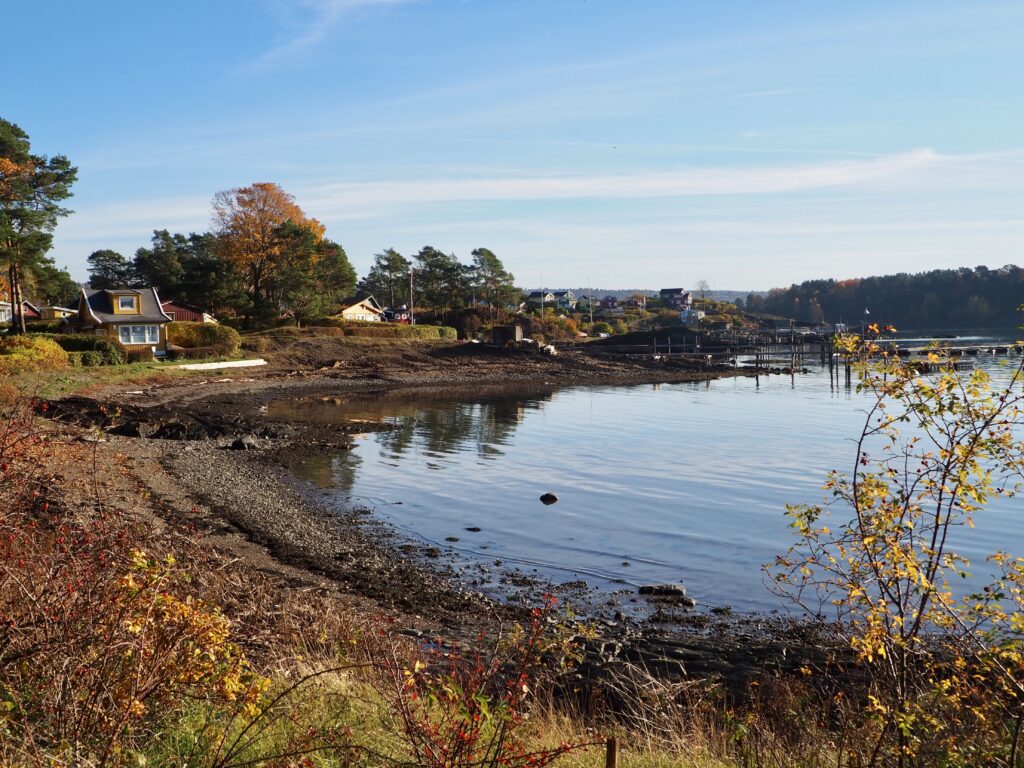
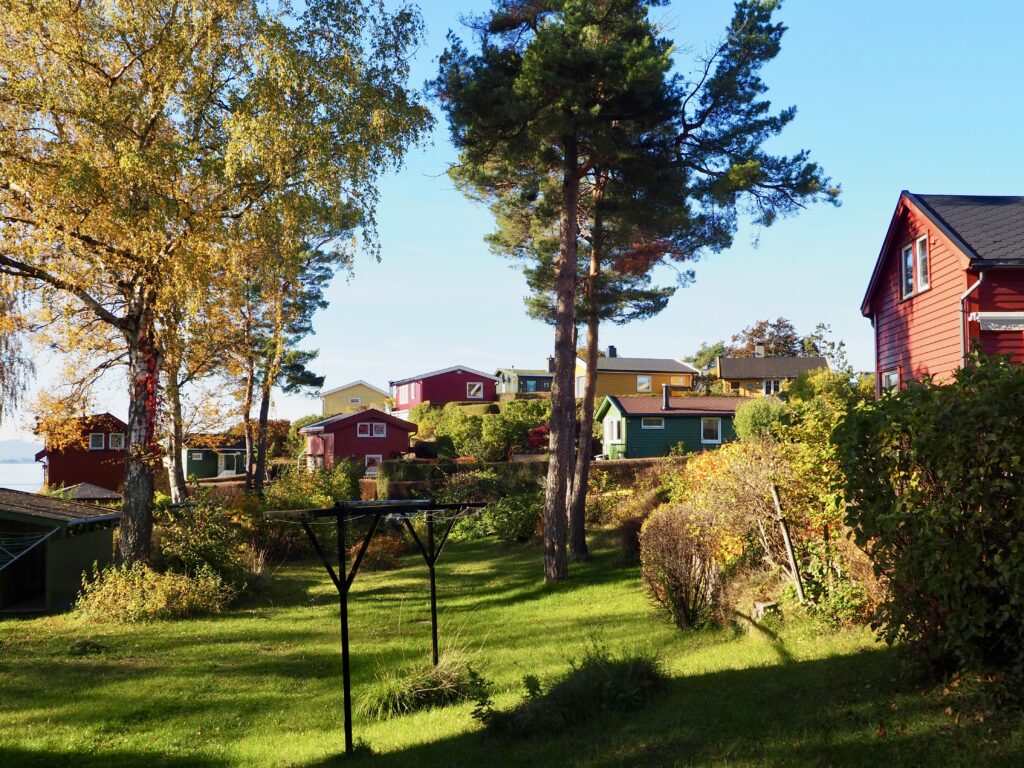
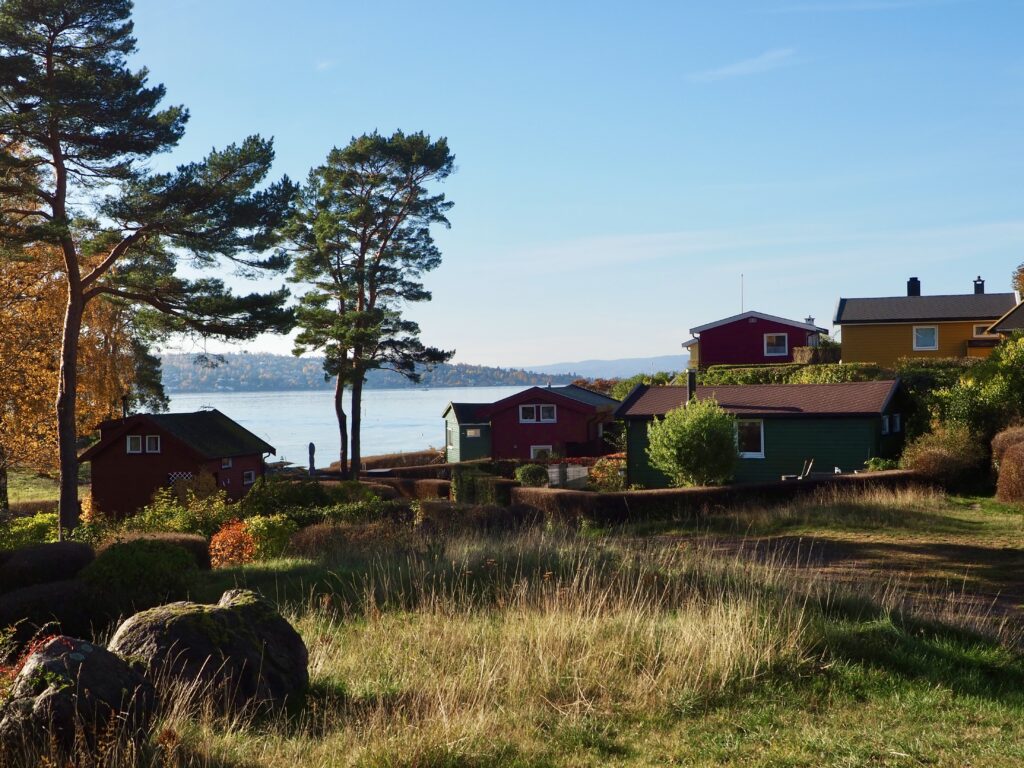
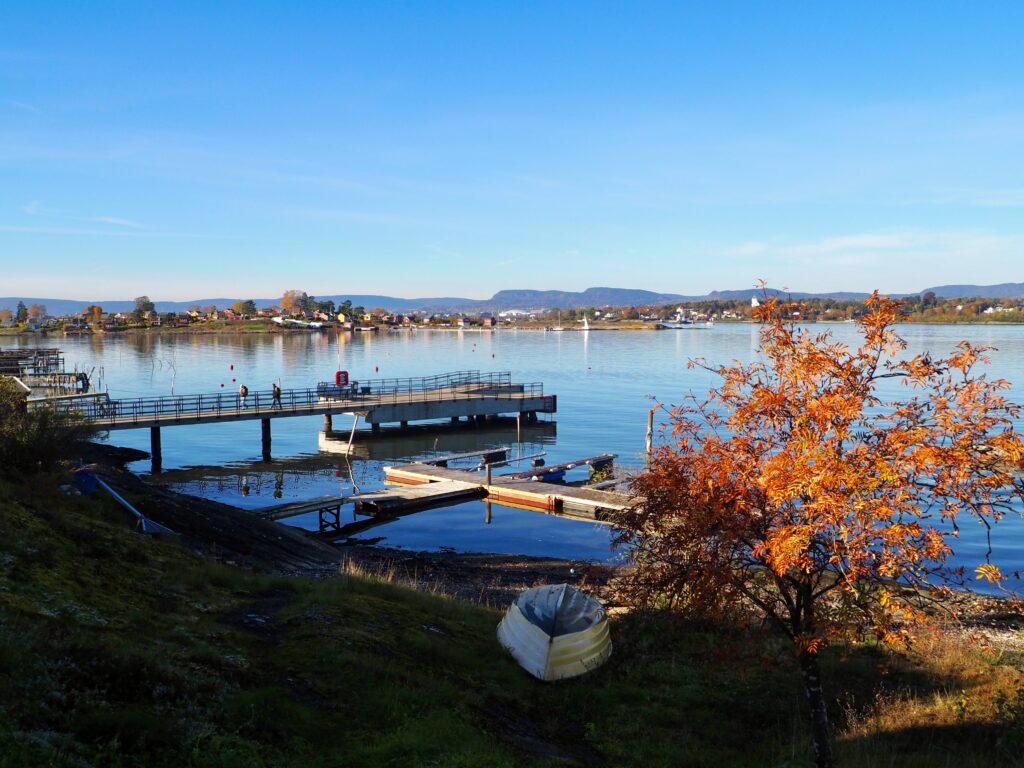
Another quick ferry ride took us directly from Hovedøya to Lindøya, similar in size. These two are the closest to Oslo itself and therefore the most popular to visit. Lindøya is known for its abundance of summer cabins, with dozens of them clustered to form small villages on the island. And every cabin is painted either red, yellow or green – no other colours to be found! – creating a very idyllic, picturesque setting. Most seemed to be empty, which made sense for mid-October, and I imagine summer is a different vibe. But it was just pretty to stroll between them. We found a rocky beach to sit and have our picnic lunch, watching other boats cruise through the fjord.
There are a few other islands accessible by these ferry services, so you could make a whole day of it. And perhaps if we’d been here in summer, we would have. Maybe even braving the cold fjord waters for a dip! As it was that day, though, we were ready to return to the mainland. Lindøya has two ferry piers, so we actually crossed the island to reboard on the far side. This also meant a more direct route back to the mainland without stopping at all the other islands. Just one stop at Hovedøya again, and then we were soon back at Rådhusplassen.
Vigeland Park
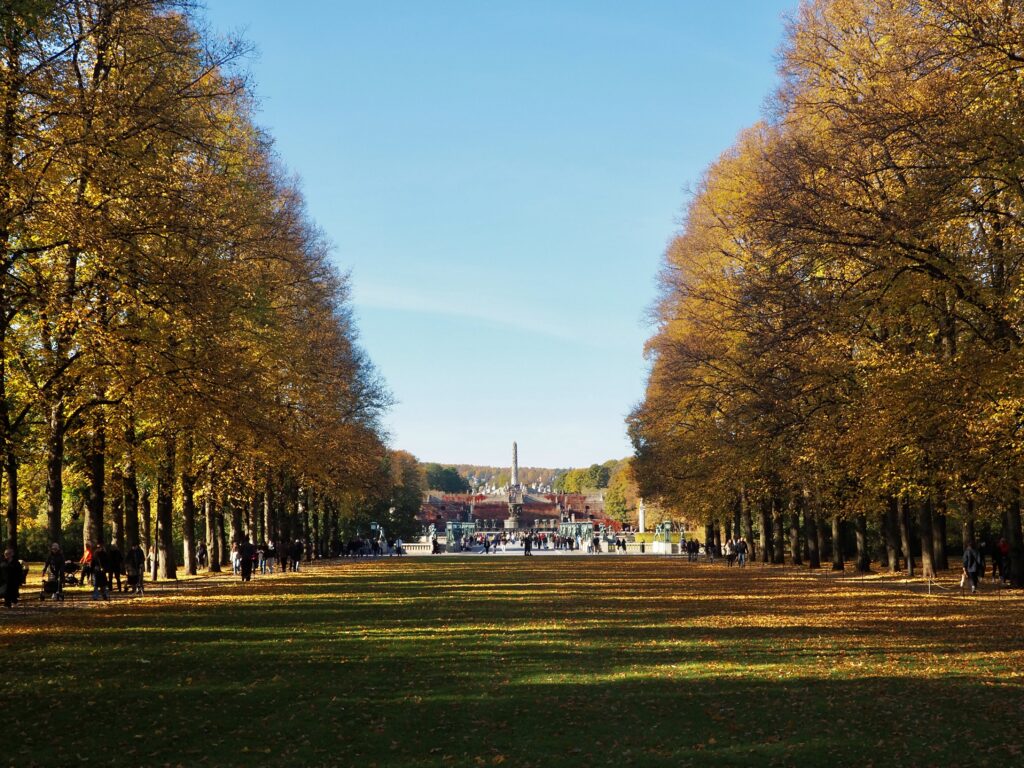
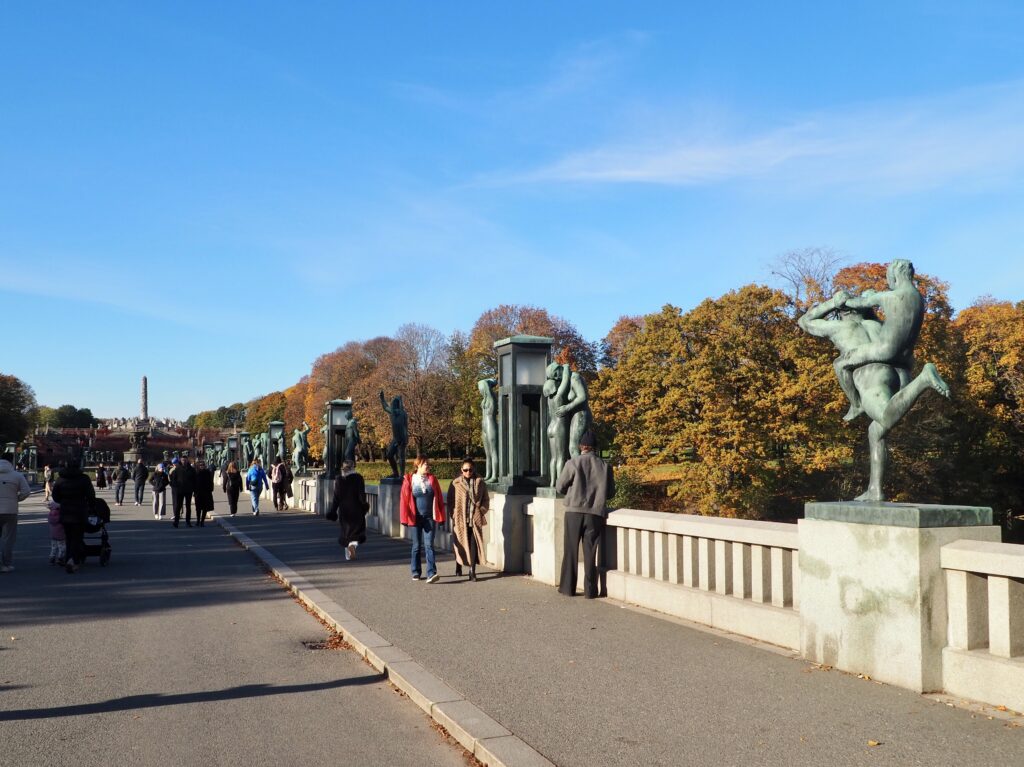
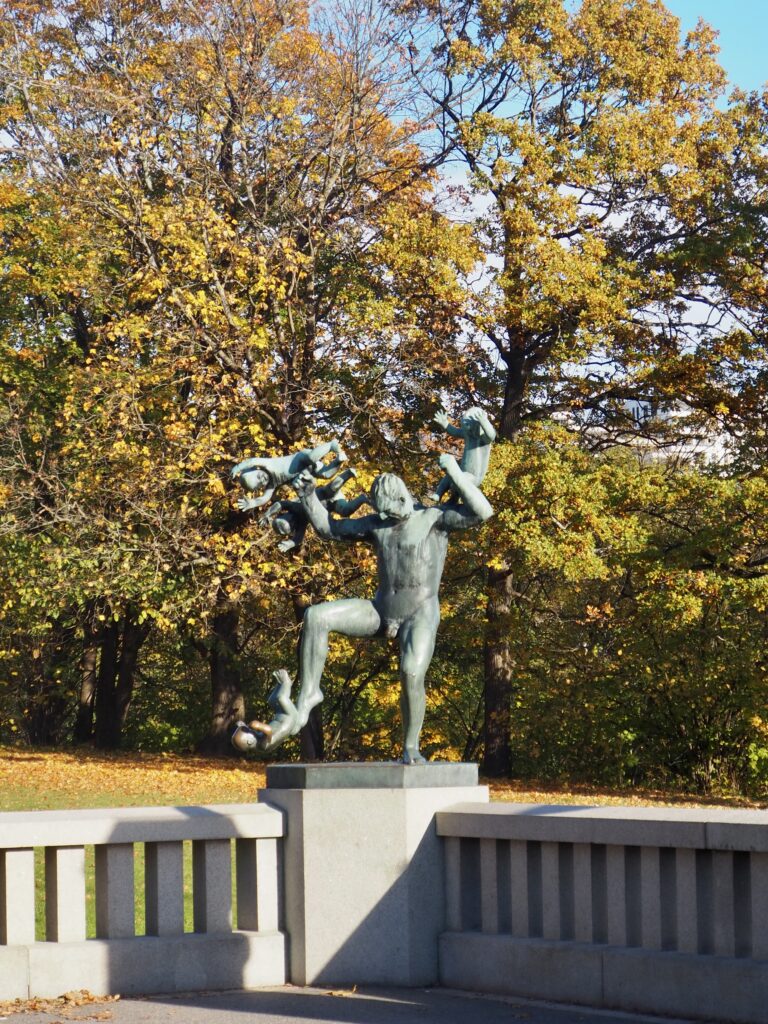
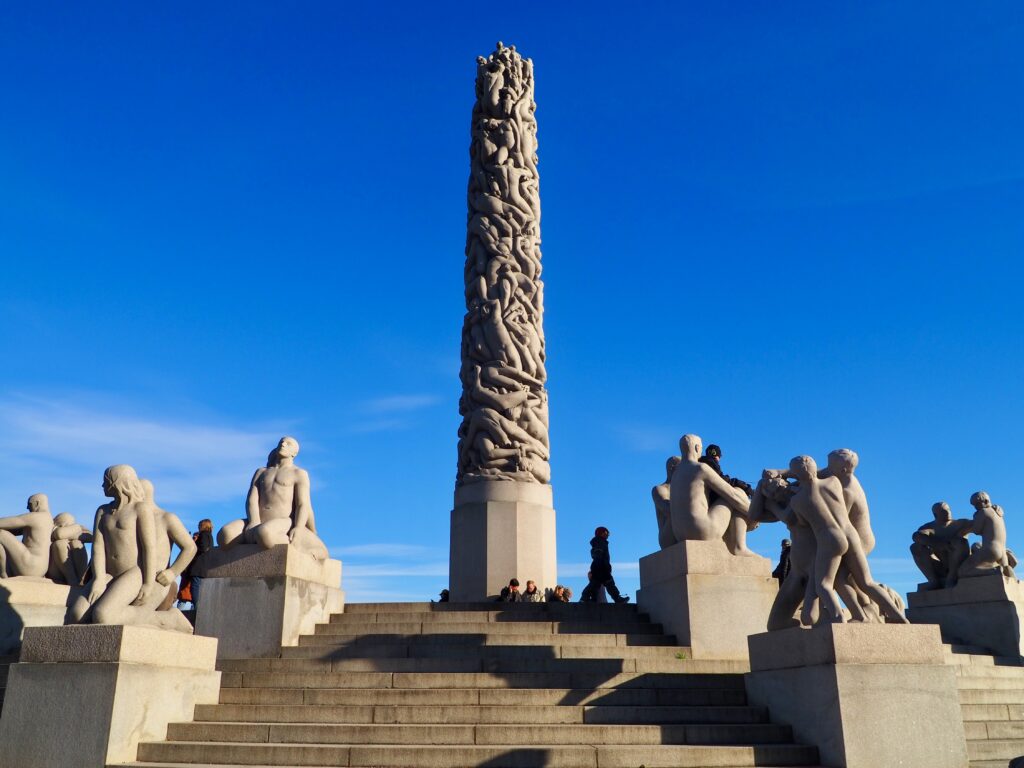
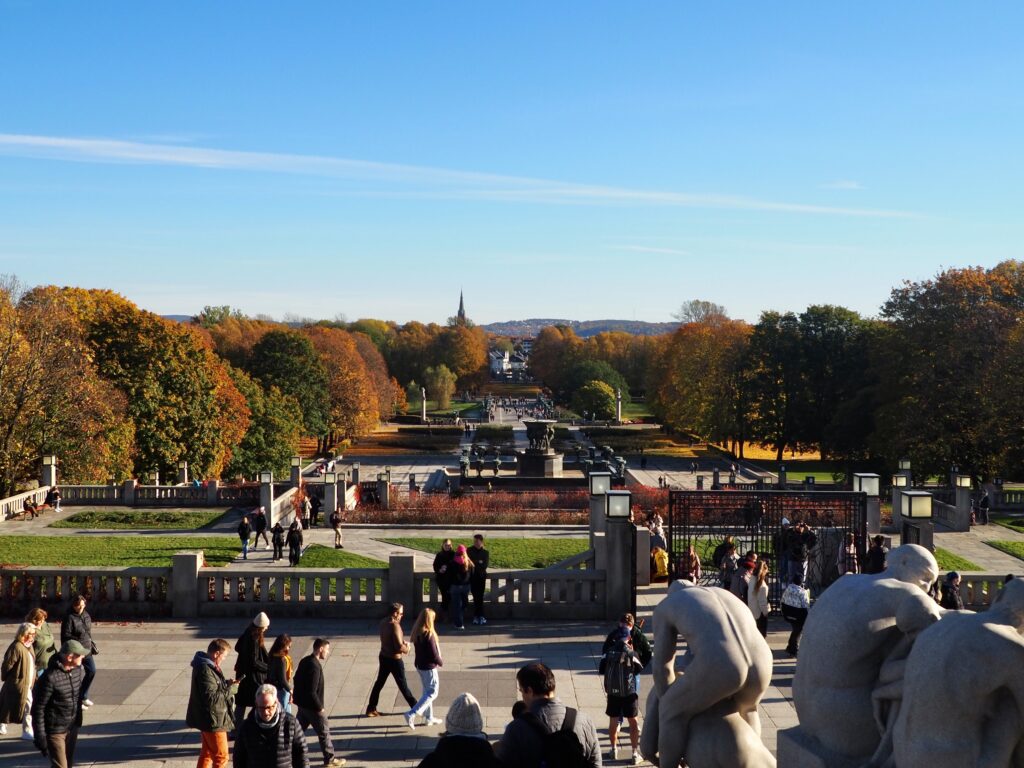
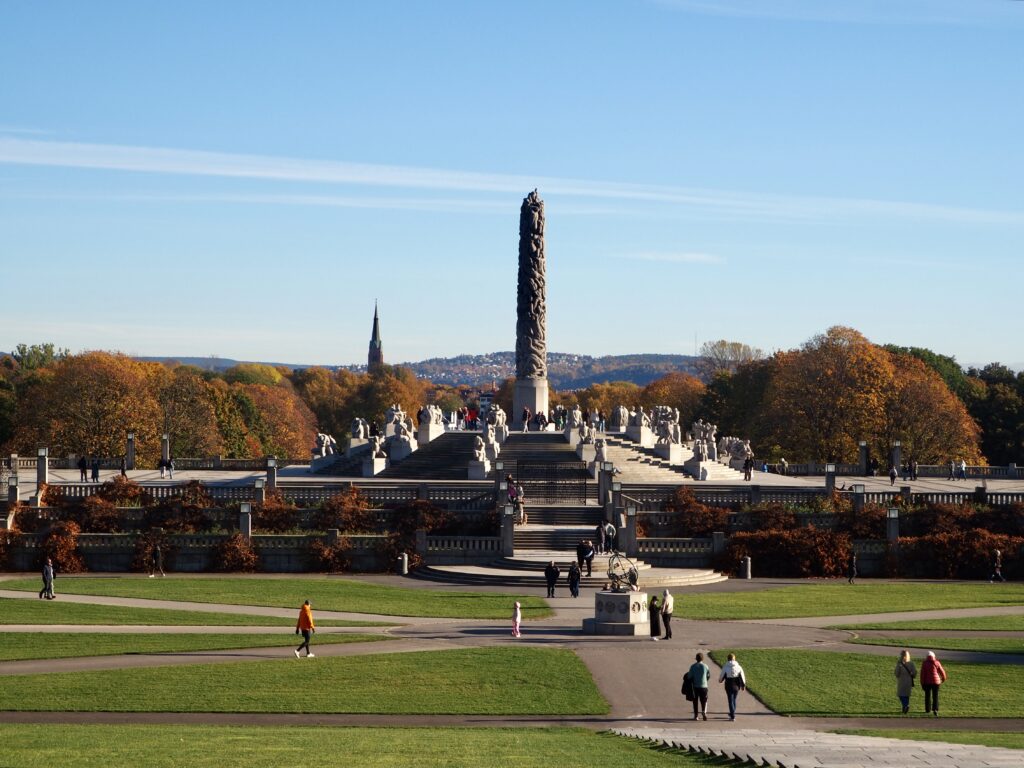
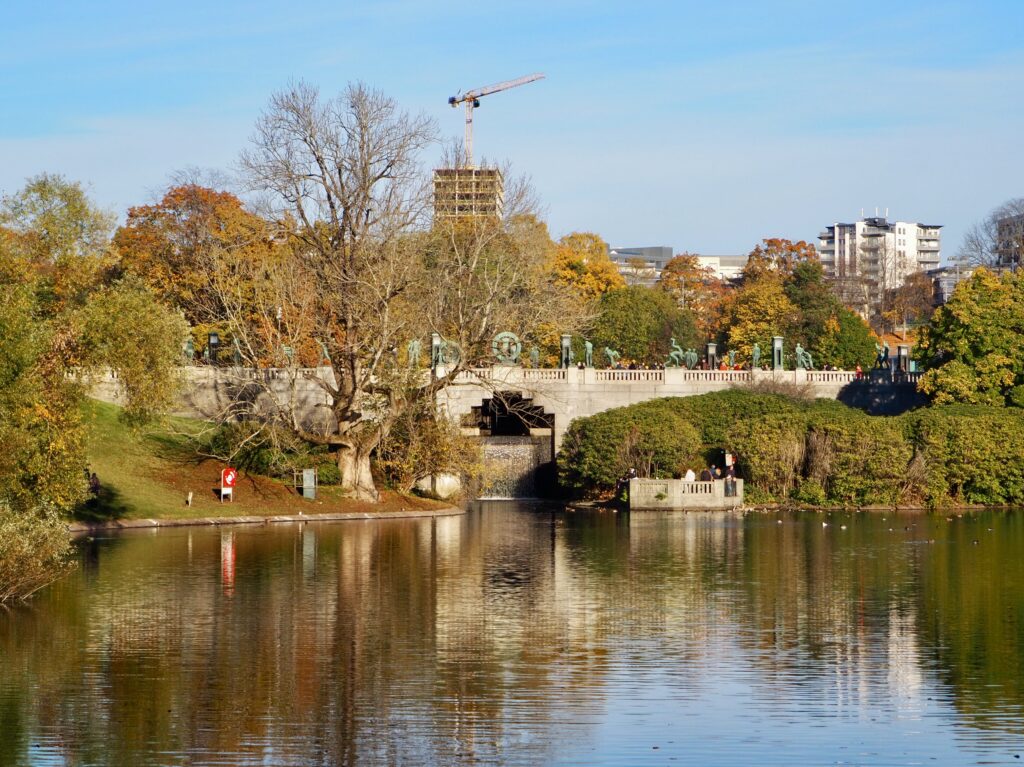
After a coffee stop, we hopped on one of Oslo’s tram lines at Aker Brygge and rode it west of the city centre to Vigeland Park. Gustav Vigeland was a sculptor, and the park houses over 200 of his sculptures, comprising most of his life’s work. It’s also the largest park in Oslo, with acres of land to explore. And the largest sculpture park dedicated to a single artist anywhere in the world! As you enter, the central avenue takes you across the large Bridge lined with statues and leads up to the Monolith on a small hilltop. From up there, you get views across the city as well! There are also lots of winding, snaking side paths to explore, with more sculptures hidden throughout.
We went into the park expecting sculptures and had seen a few photos beforehand. But the sheer number and scale of the statues is staggering, first of all. And we knew nothing about Vigeland’s style or subject matter (the photos were generally from a distance). So we were not expecting it to be entirely nude figures, of all ages and genders, in this large, almost cartoonish style. Some lean more whimsical, while others are downright unsettling. Their poses are pretty odd as well, from contortions to throwing babies… It was certainly entertaining and amusing to peruse them all! We spent an hour or so here, wandering much of the park’s grounds, before catching the tram back again.
The Royal Palace
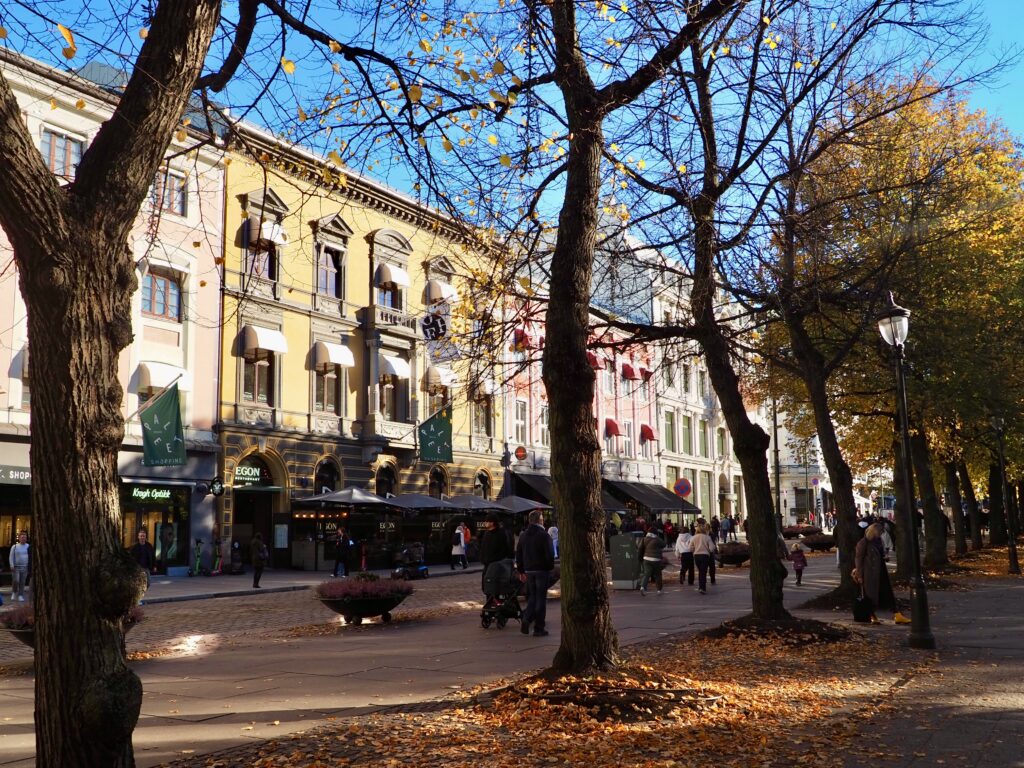
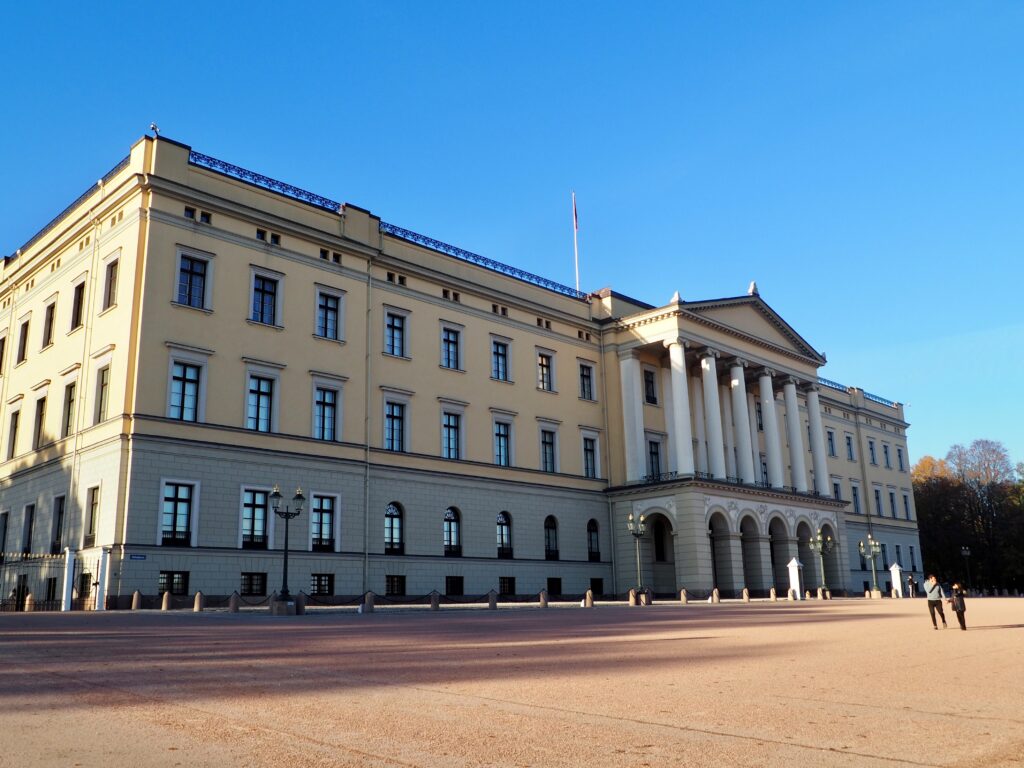
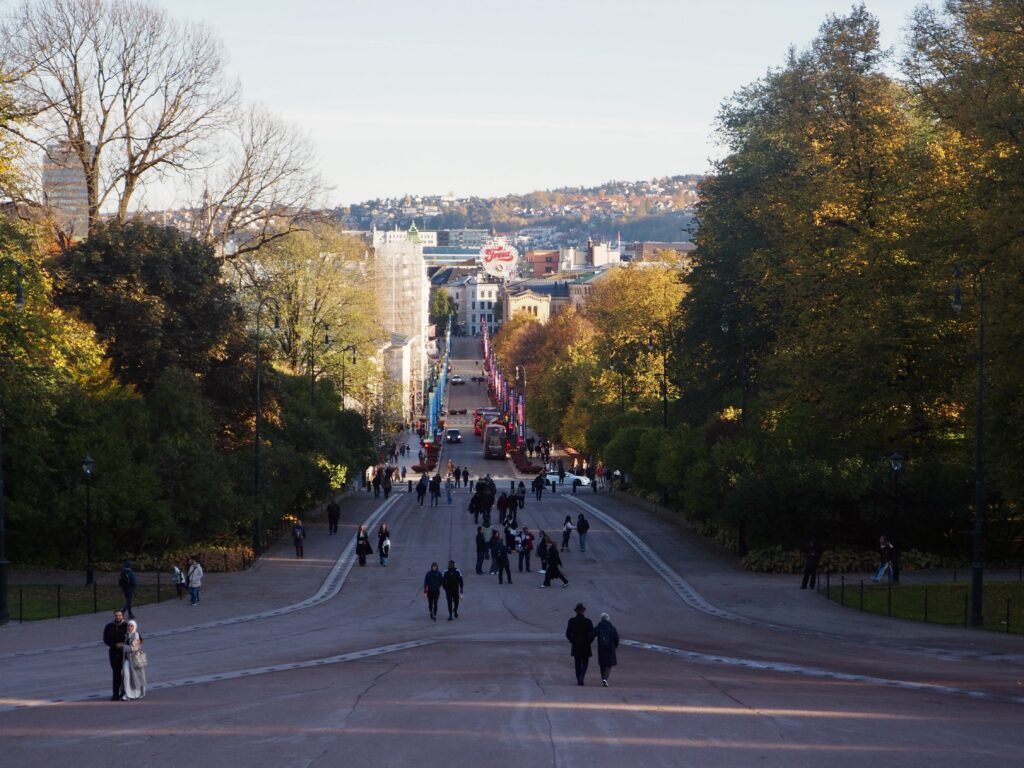
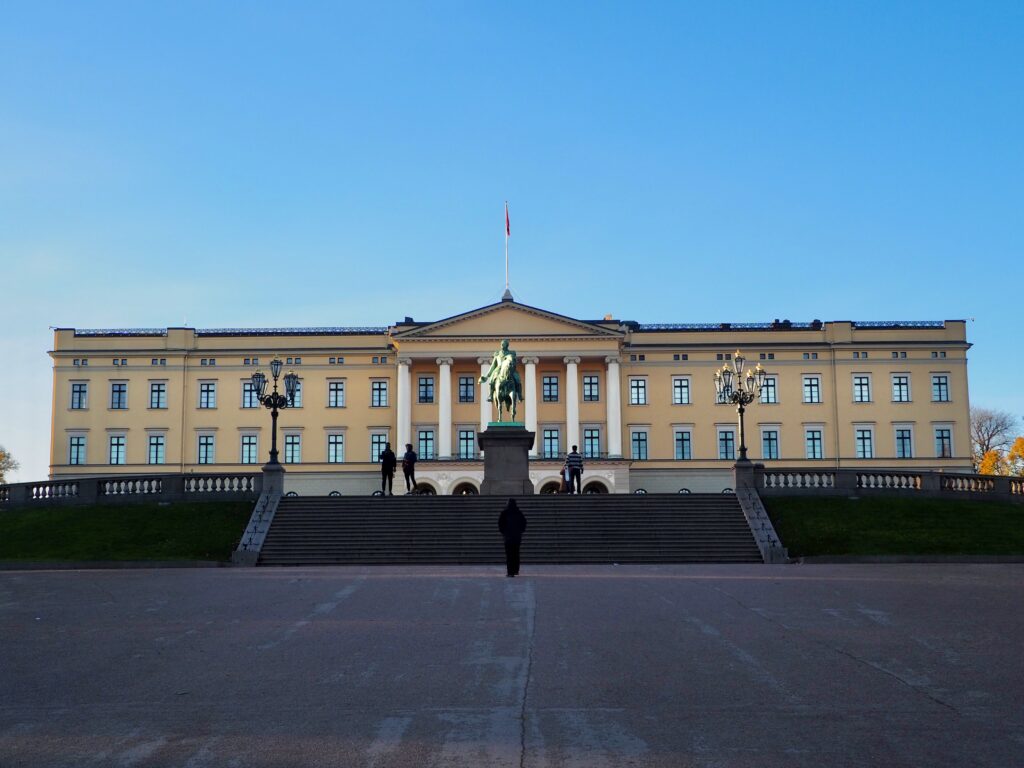
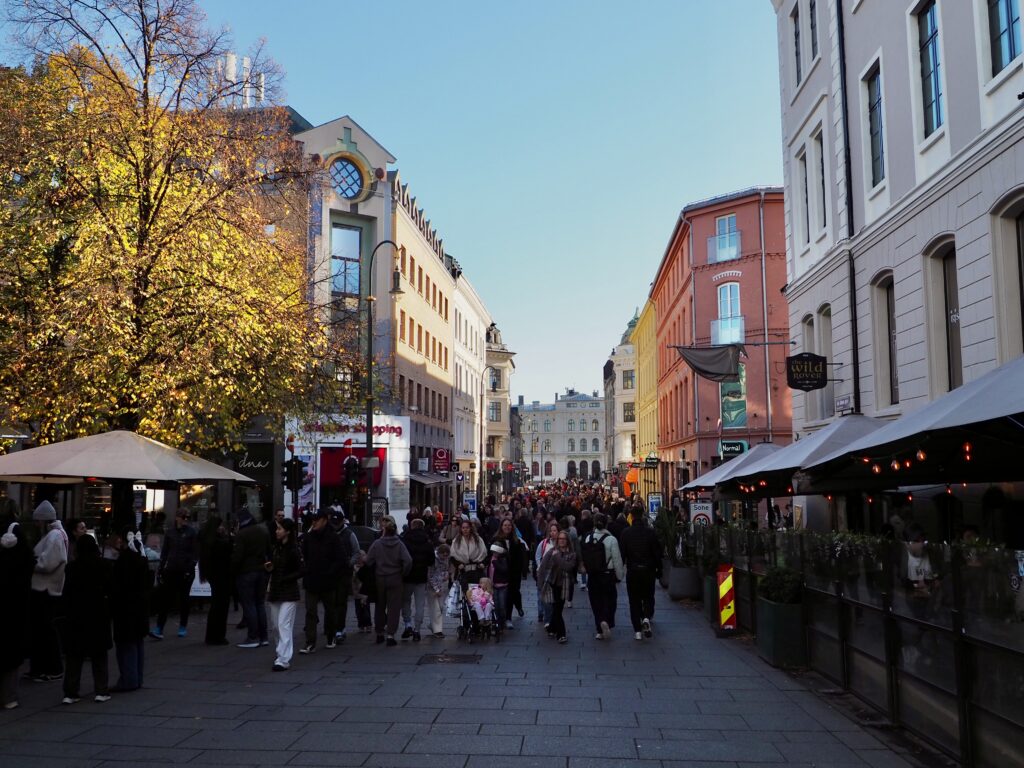
We disembarked again near the Royal Palace and walked up the small hill to see it from the front. It was closed to the public, but the long, symmetrical, pale yellow exterior is still impressive. Then it was a straight line from there down Karl Johans gate, the city’s main pedestrian street. We stopped to browse for souvenirs, then followed this back to our hotel.
Later that evening, we headed out for dinner, following our tour guide’s recommendation: tacos. He said they’re super popular in Norway! Los Tacos is a chain with several branches in Oslo, and we went to the Bjørvika one on the other side of the Opera House. Not necessarily what we were expecting to eat in Norway, but we definitely enjoyed it!
Day Three
Harbour Promenade Walk
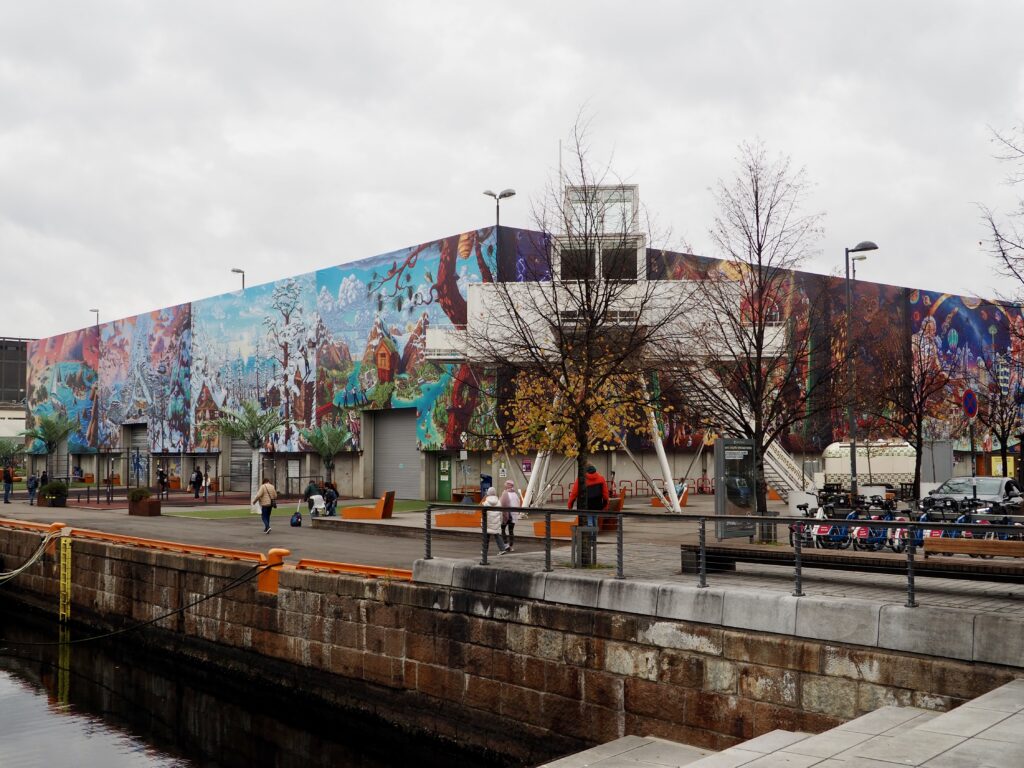
On the last day of our weekend in Oslo, we had to check out of our room and leave our luggage at the hotel until our evening flight. We’d decided to tackle the bulk of the Habour Promenade Walk this morning. We’d already encountered a few stretches of it this weekend, spotting the tall orange-marked information pillars that recount the harbour’s history. But today we went all the way to the end of the Sørengautstikkeren peninsula to start, and followed it right around to just past Aker Brygge.
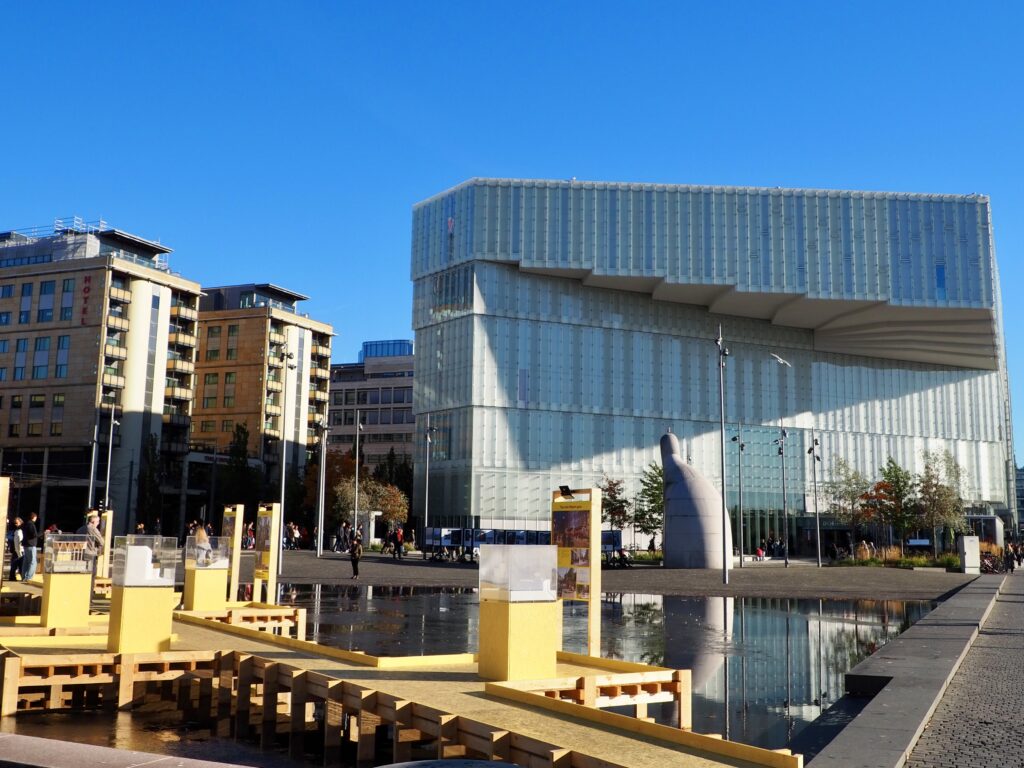
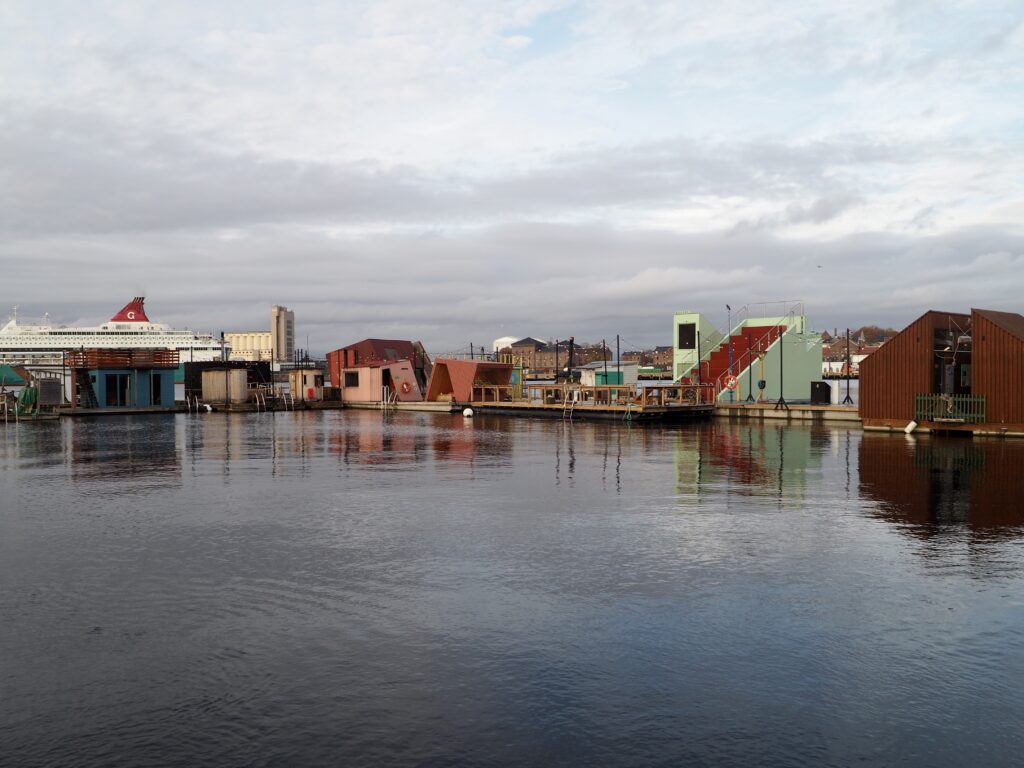
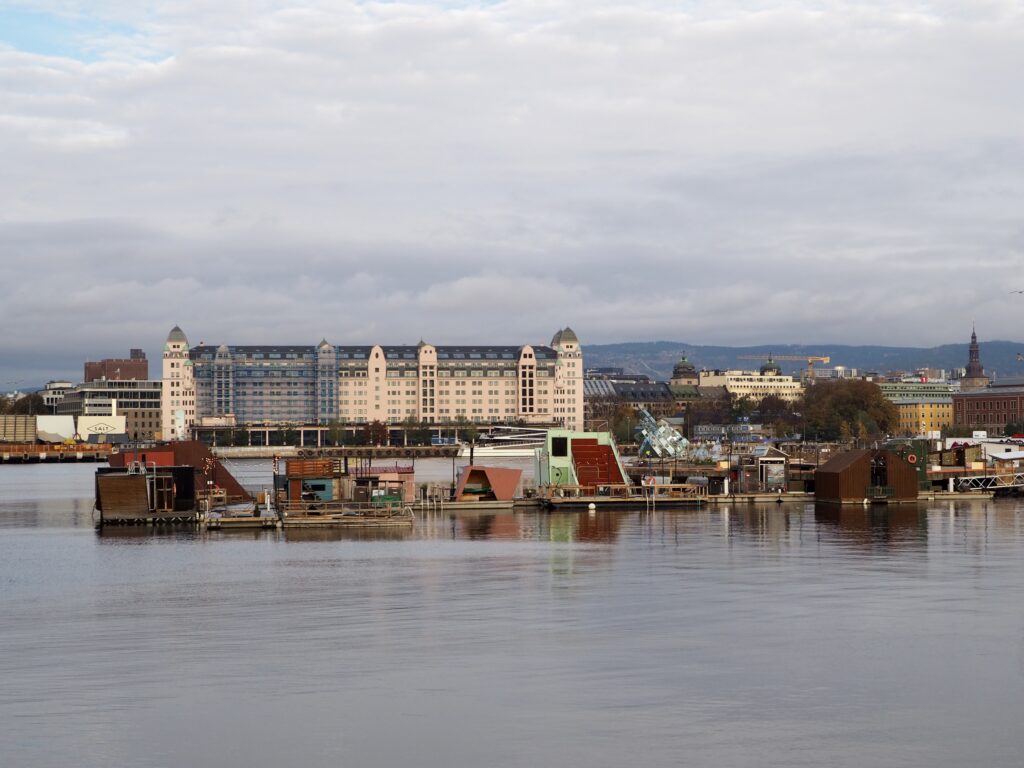
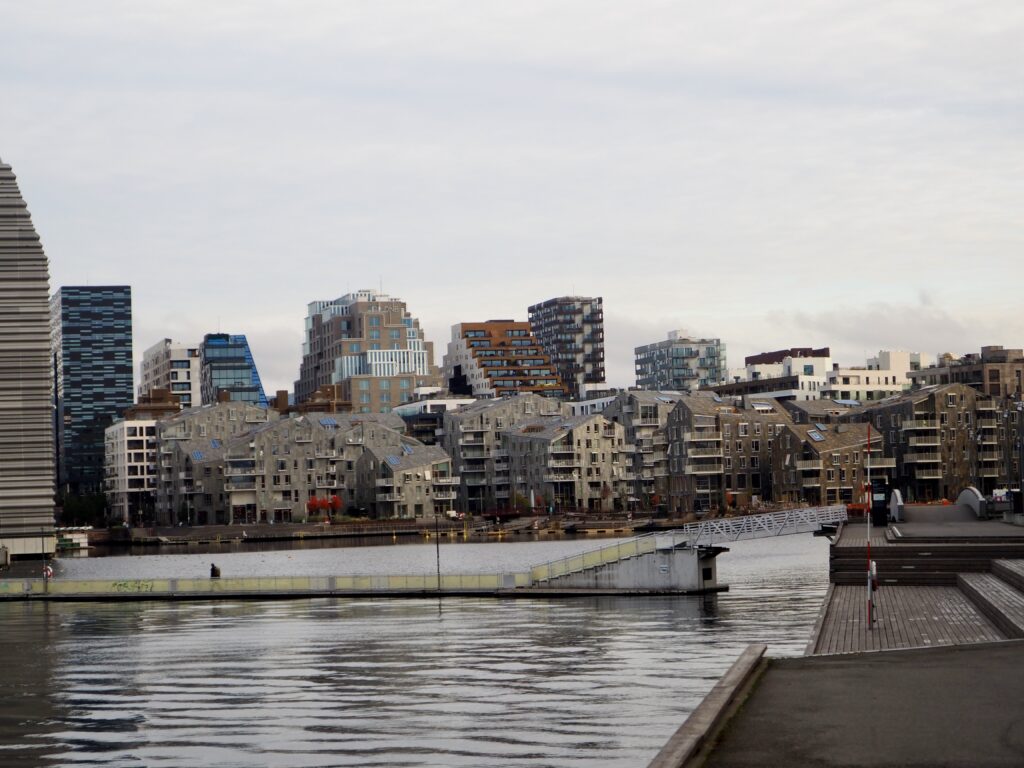
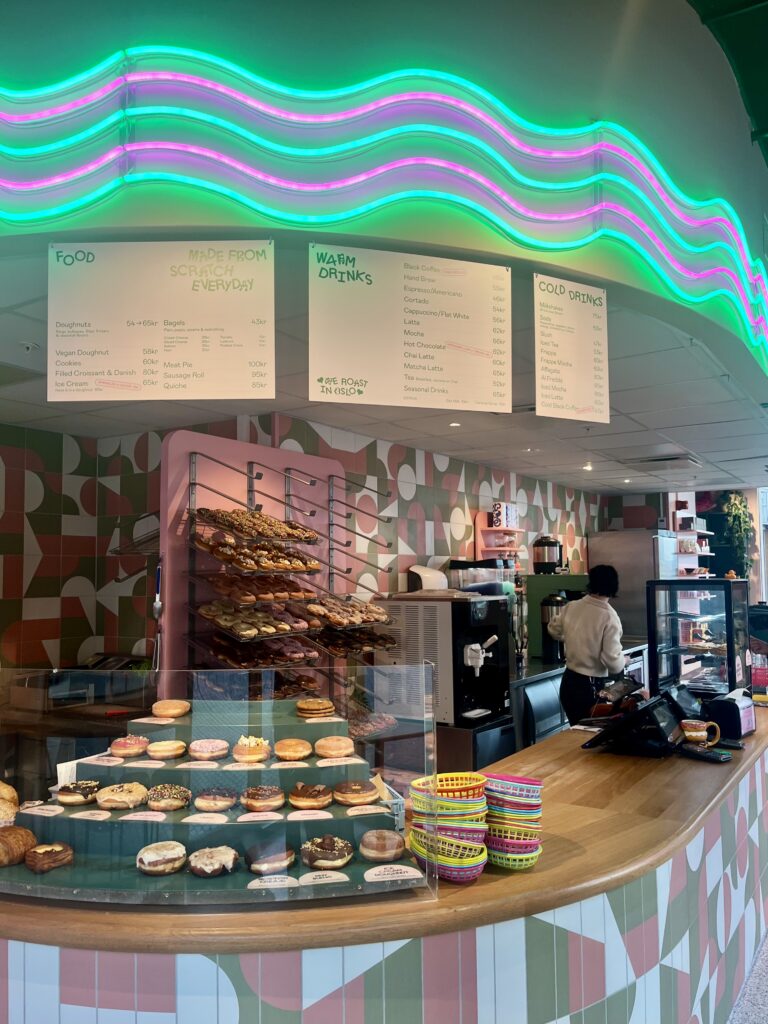
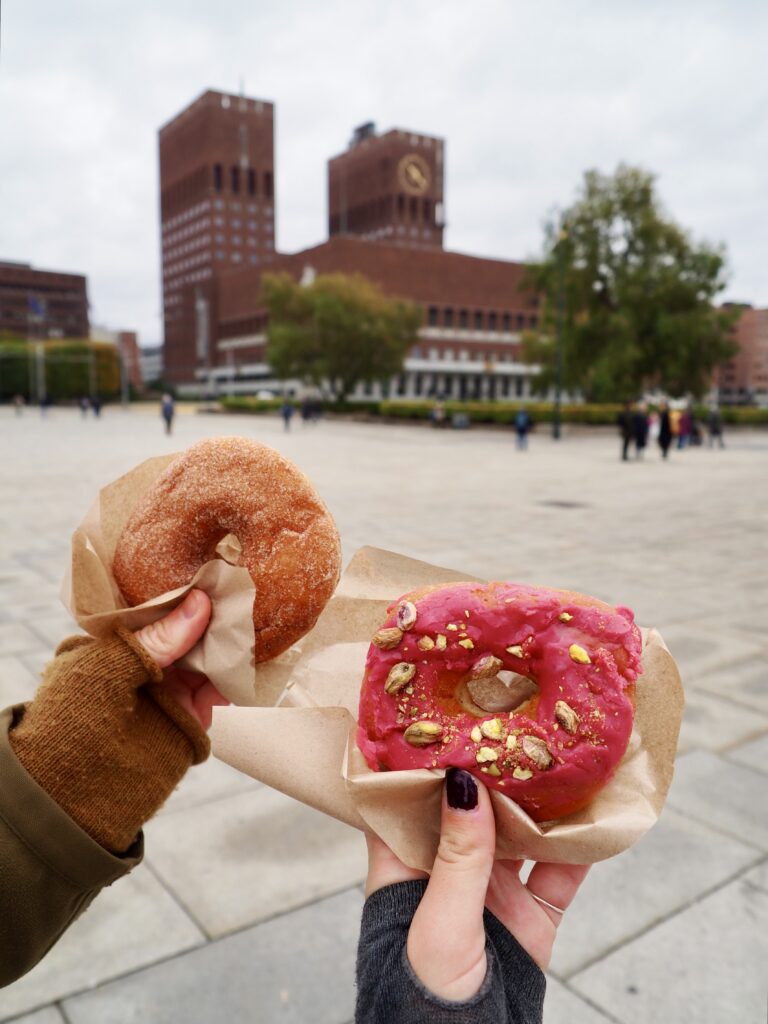
We definitely enjoyed the Bjørvika neighbourhood, with all these new homes built on a former industrial area. The Munch Museum is over here, which neither of us was too bothered about visiting, since we’re only familiar with ‘The Scream’. We saw the Badstuforening Sukkerbiten floating sauna, which seemed to be a mismatch of different coloured and shaped buildings in a cool location near the museum. We also popped into the library for a browse of their gift shop. And very importantly, picked up coffee and doughnuts from Talormade, which is a quirky cafe with a huge array of doughnut flavours and super friendly staff. Highly recommend!
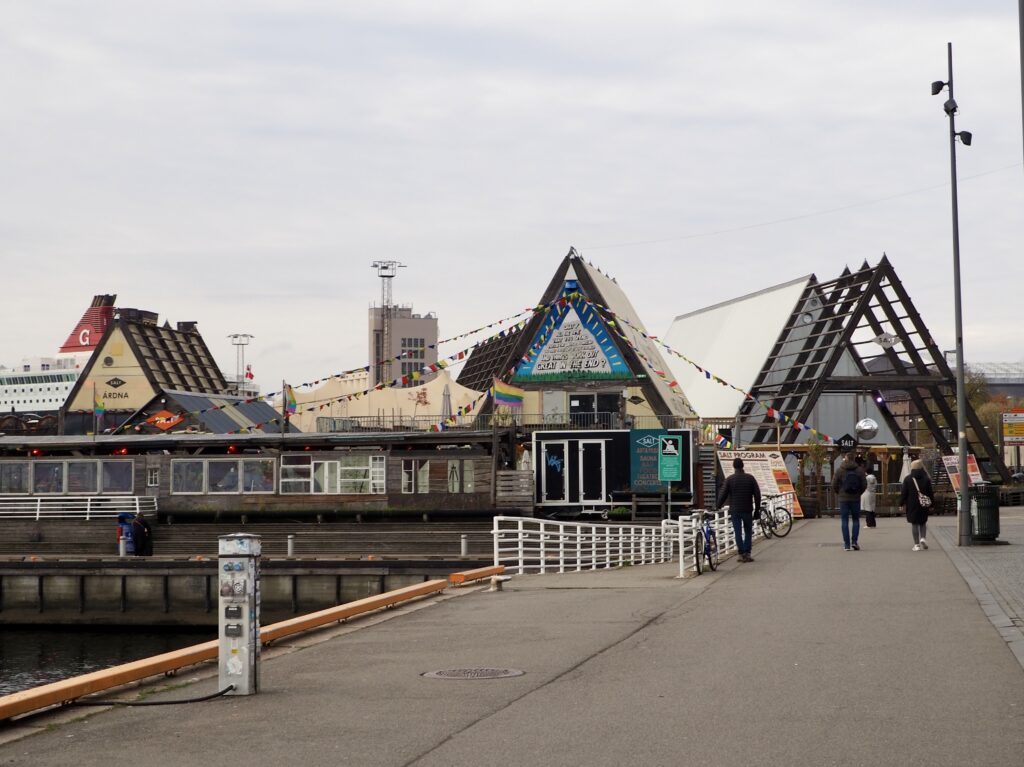
After passing the Opera House again and then SALT, an art project with food vendors, music events and saunas (of course), the walk got a little less interesting. It led us through the port area, which just had less going on, until we encountered a row of people fishing off the harbourfront. We walked below the Akershus fort again, eventually returning to the familiar Rådhusplassen.
Oslo Rådhus (City Hall)
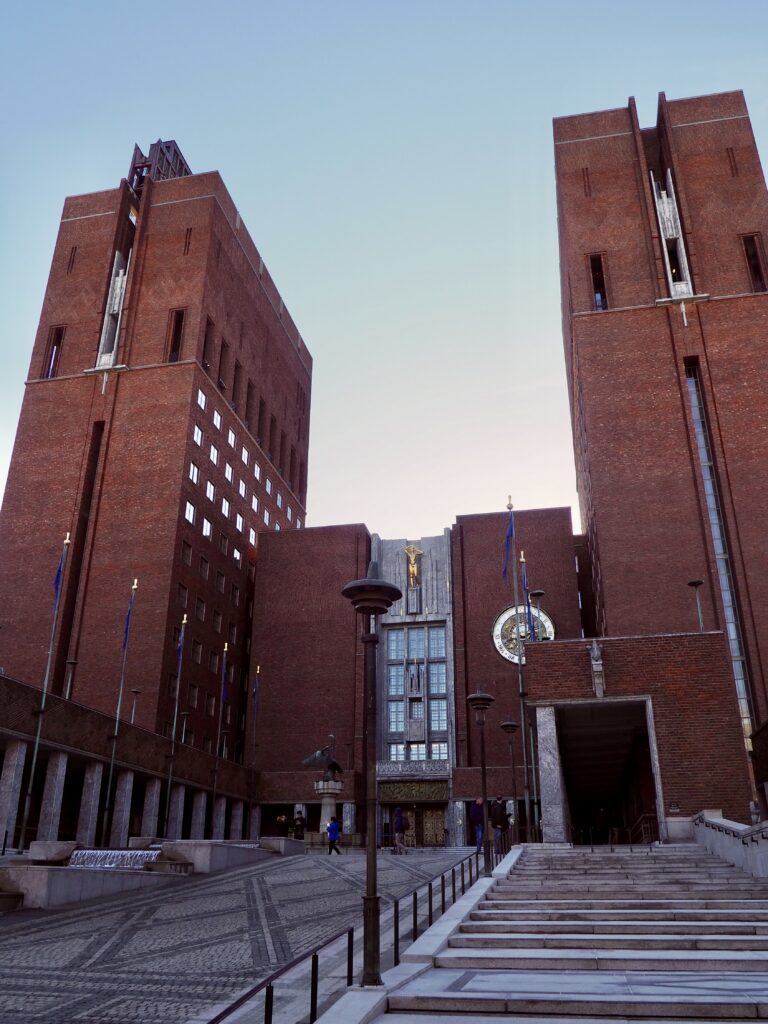
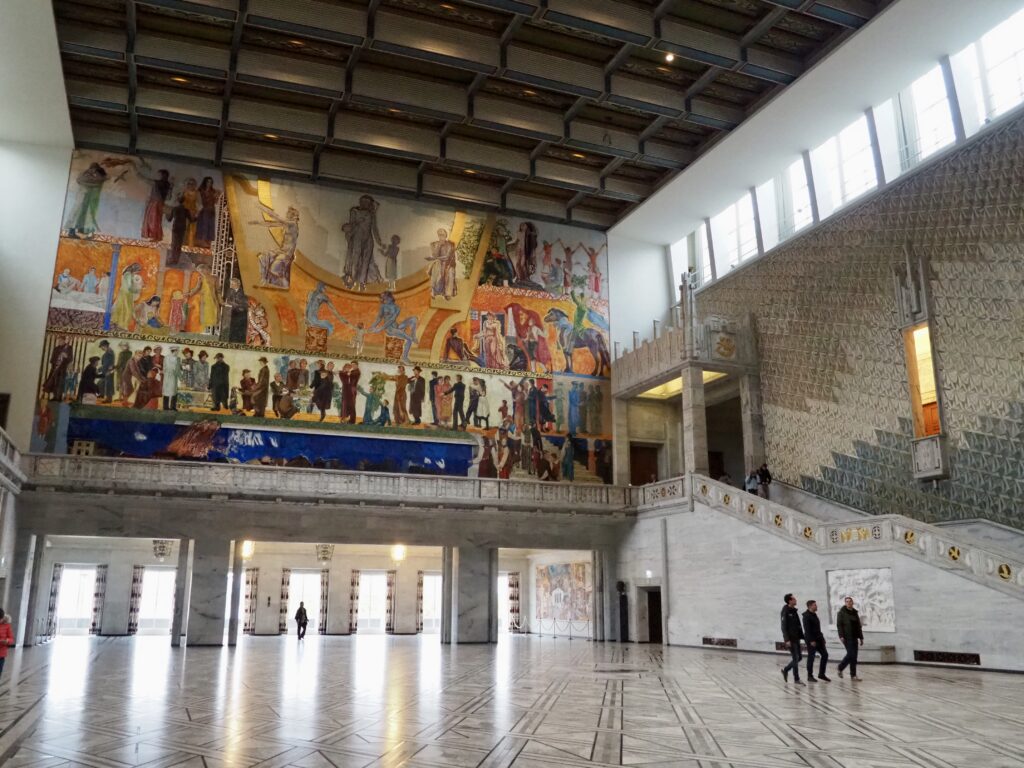
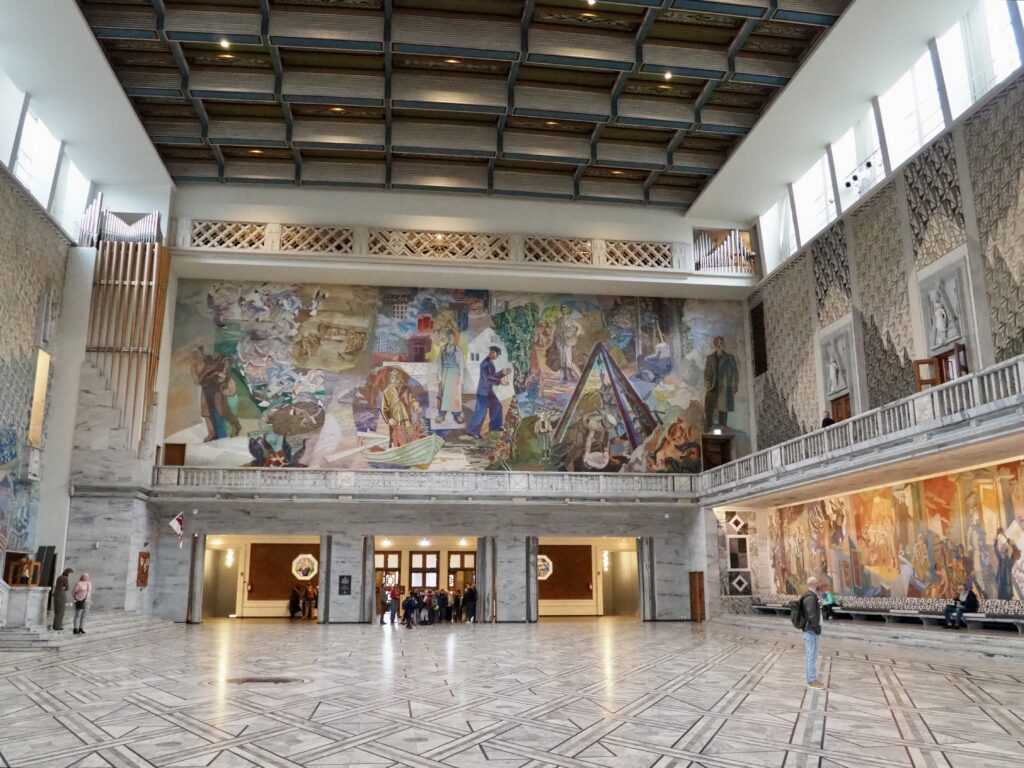
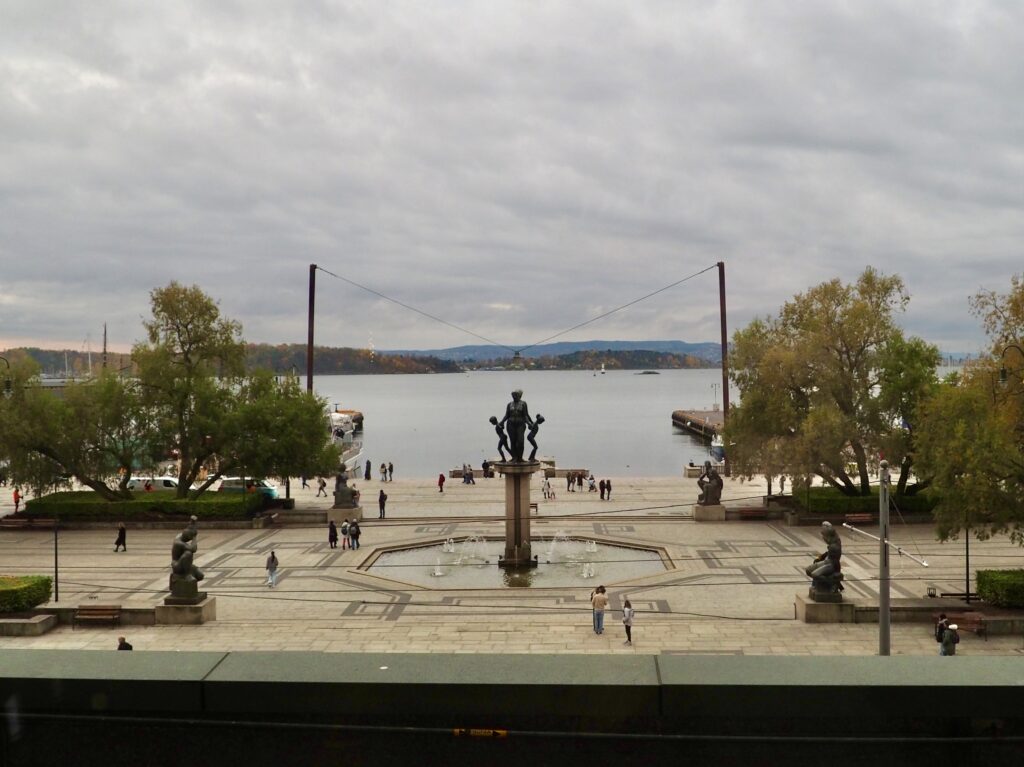
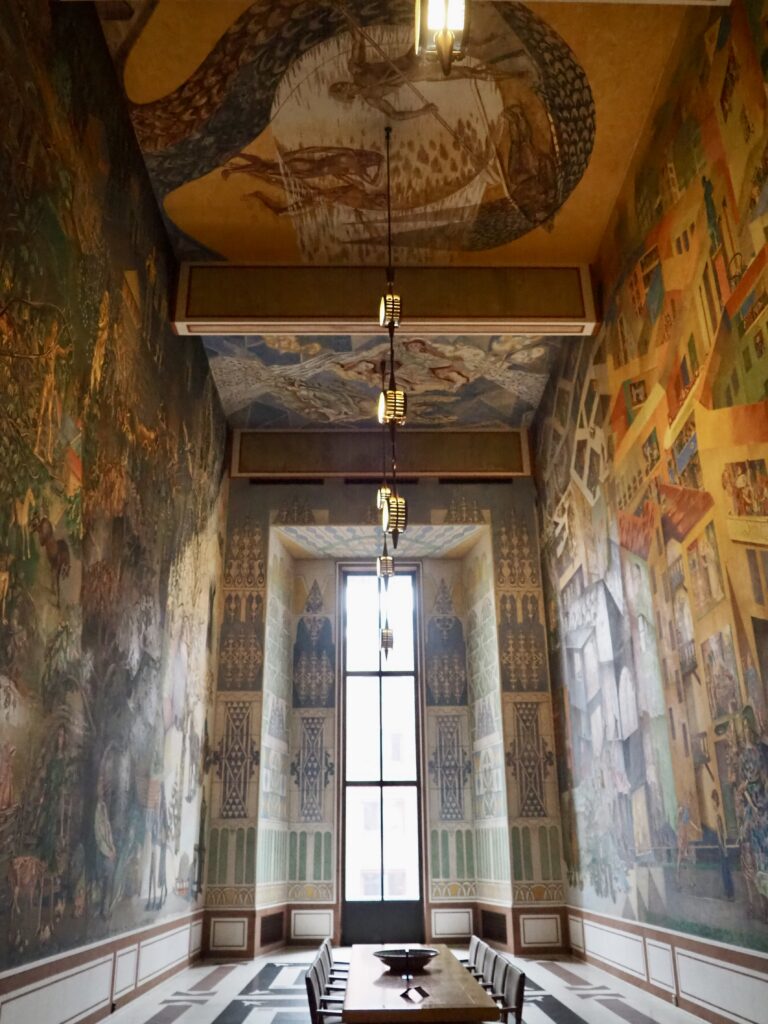
Now we’d seen the Rådhus, the city hall, from outside several times already during our weekend in Oslo. The tall, red building with its pair of towers is quite imposing. It’s very square and blocky and not my usual cup of tea, honestly. But our tour guide had recommended visiting the interior, which is free, and after a quick security screening, we found ourselves in the building’s central hall. The room houses vast murals on the walls, telling the story of Oslo’s people, set against a marble floor and railings. We were able to go upstairs and explore some of the other rooms, each of which was elaborately designed and different to each other. The harbourfront location also means great views out to the Oslofjord from the front.
It wasn’t somewhere on our radar at all before the trip, other than to see from the outside. But we were very pleasantly surprised and amazed by the interior. Proof that it pays to take walking tours and listen to local recommendations!
Fram Museum
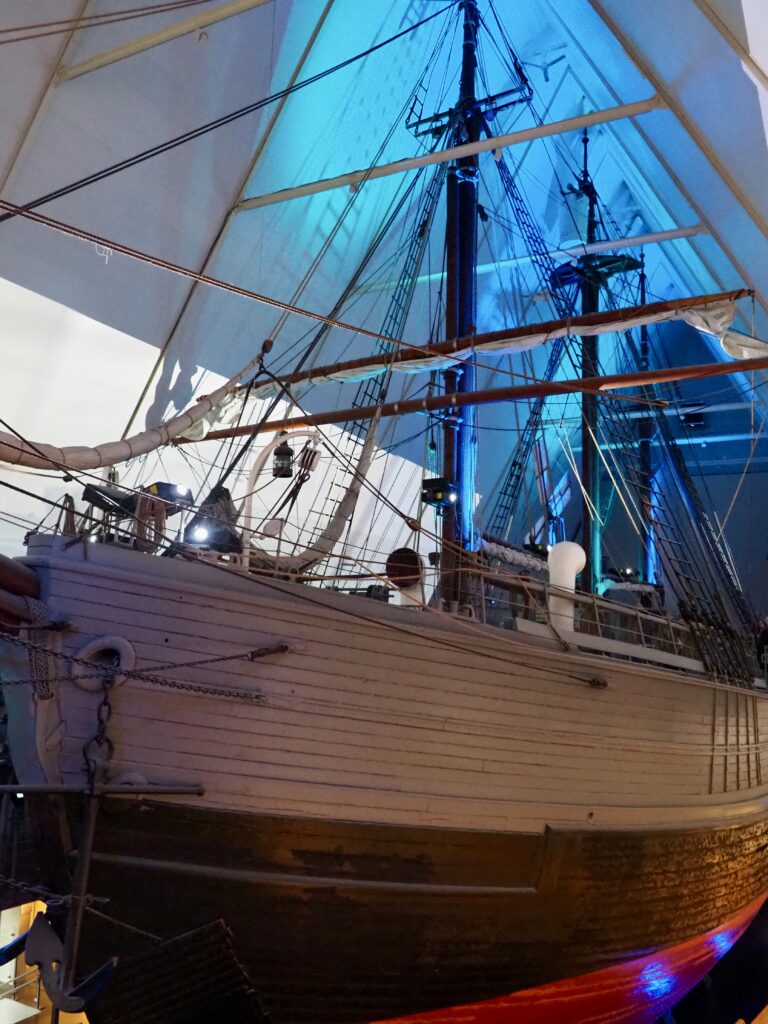
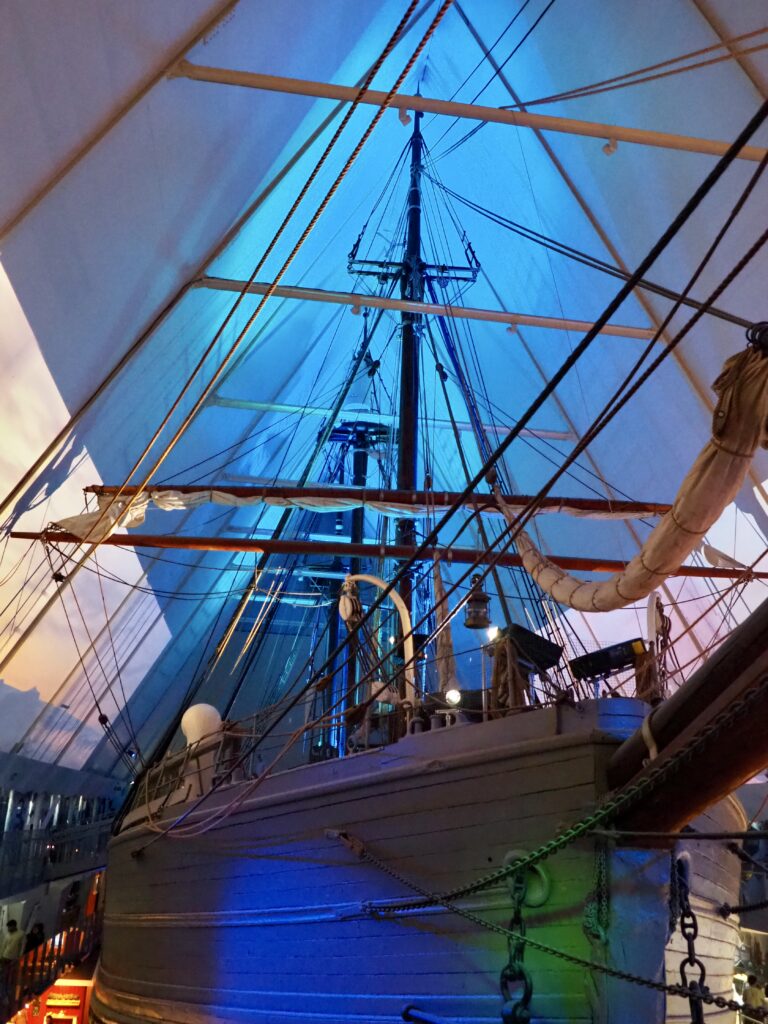
With a drizzly afternoon on the cards, our last few hours in Oslo were dedicated to finally visiting some of the city’s numerous museums. We hopped on a bus to Bygdøy (the ferry only runs in the summer), which is home to several museums. We’d opted for the Fram Museum, which sits in one of the triangular prism buildings at the far end of the peninsula. We’d seen these from the water on our cruise the other day! They offered us combo tickets to include the Kon-Tiki Museum, which wasn’t the original plan, but we decided to go for it, since it’s just across the road.
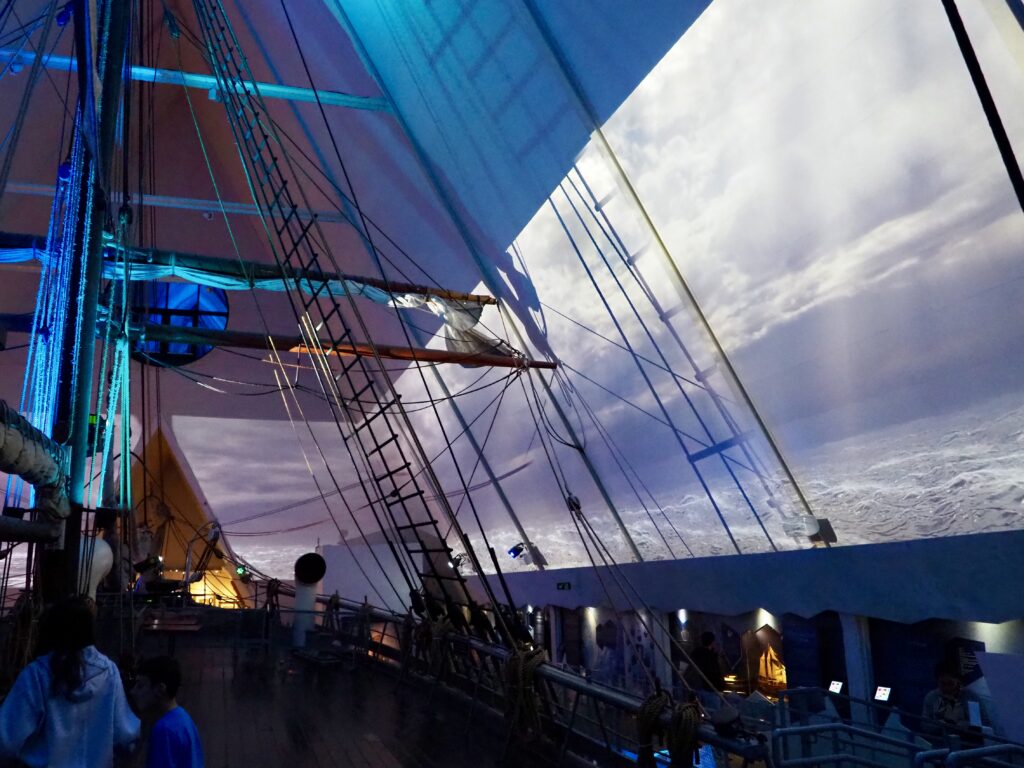
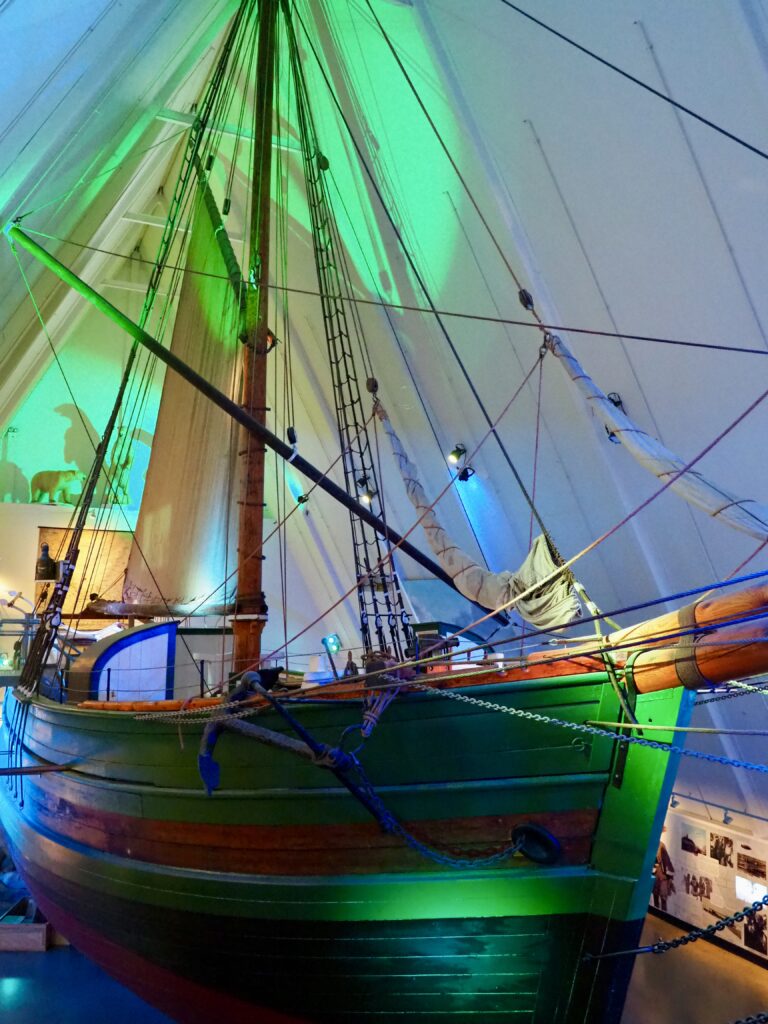
The Fram is a ship housed in the museum, which sits in the centre of the triangular prism. Galleries line the walls up each side of it, with a lot to explore and read, and then you can step aboard the ship from the higher levels. A second extension prism was added in 2013, housing another ship, the Gjøa.
Both ships were used for Arctic and Antarctic explorations in the 1890s and 1910s. After my trip to Antarctica a few years ago, I’ve become far more interested in this sort of history! Most famously, Fridtjof Nansen allowed the Fram to freeze into the Arctic ice for three years in an (unsuccessful but still dramatic!) attempt to drift across the North Pole. Later, the Fram took Roald Amundsen to Antarctica, where he led the first successful expedition to the South Pole. Meanwhile, the Gjøa was also used by Amundsen, the first ship to fully traverse the Northwest Passage, along the top of Canada. These are such incredible stories of polar exploration, so it was wild to be on board pieces of history like this!
Kon-Tiki Museum
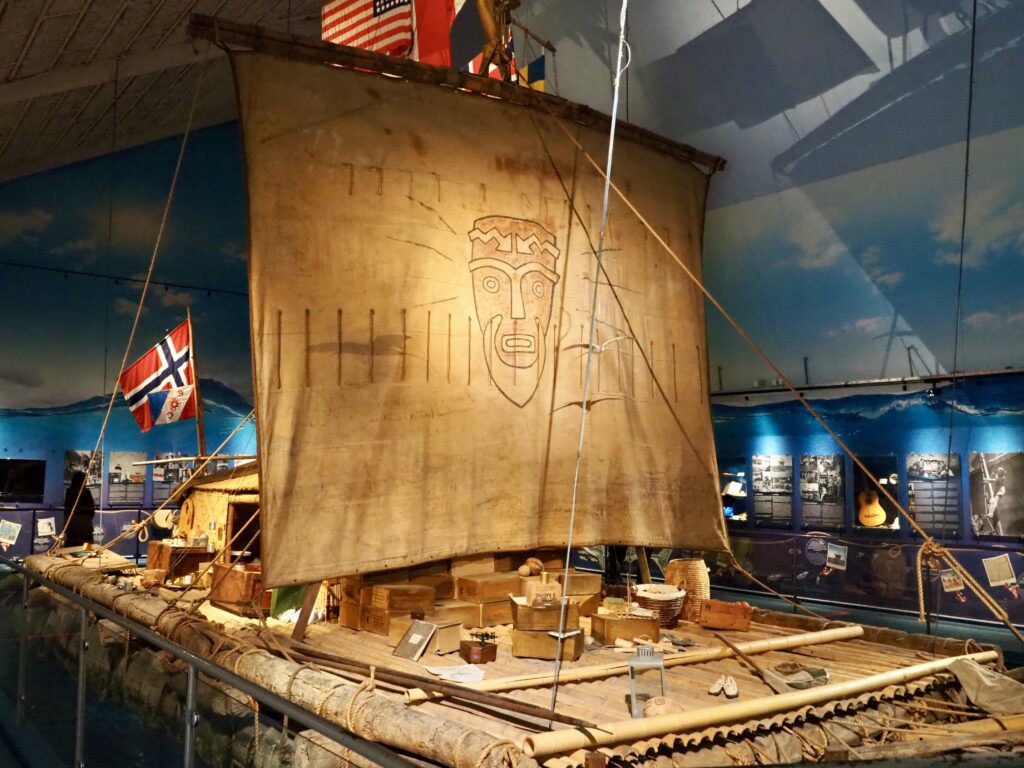
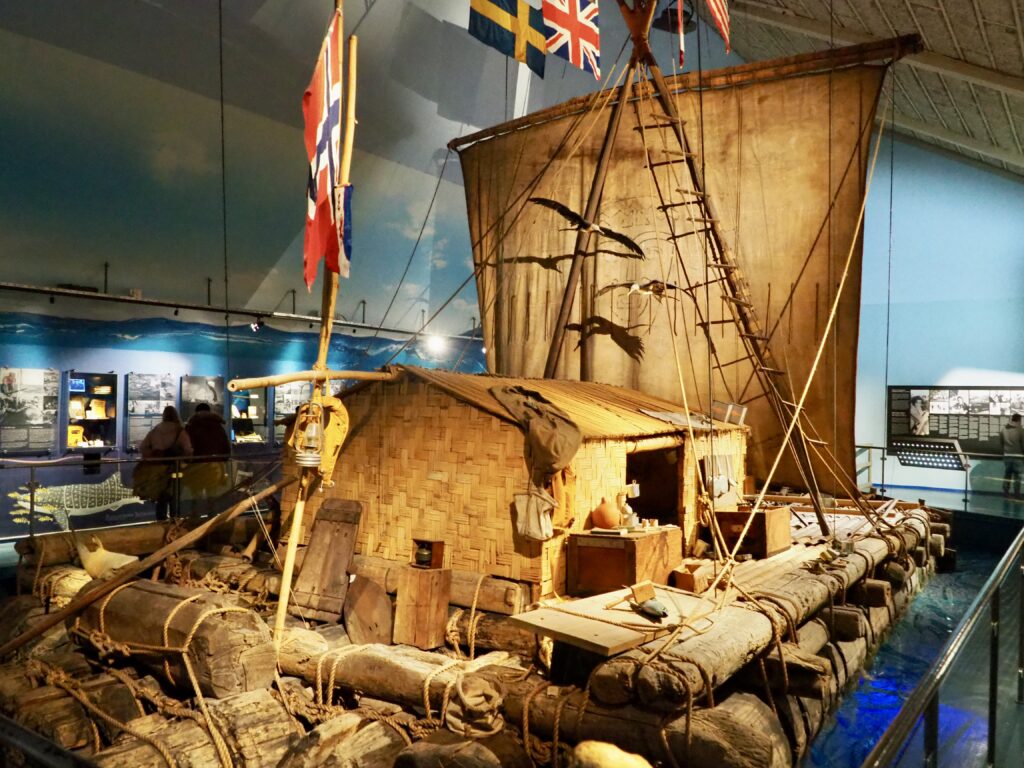
The Kon-Tiki Museum continues with the theme of Norwegian exploration, but in a very different part of the world. It focuses on the adventures of Thor Heyerdahl and his unique voyages across the world’s oceans. The Kon-Tiki, named after an Incan god, is a traditional Peruvian balsa wood raft. In the 1940s, Heyerdahl and a small crew sailed it from South America to Polynesia across the Pacific. The idea was to prove that an indigenous American group could have reached Polynesia before the Polynesian people. This notion has been rejected, as there is far more evidence that Polynesians travelled from the west over the Pacific. But the crew’s 101-day journey across the world’s largest ocean, on this small, simple raft, is still a pretty incredible story!
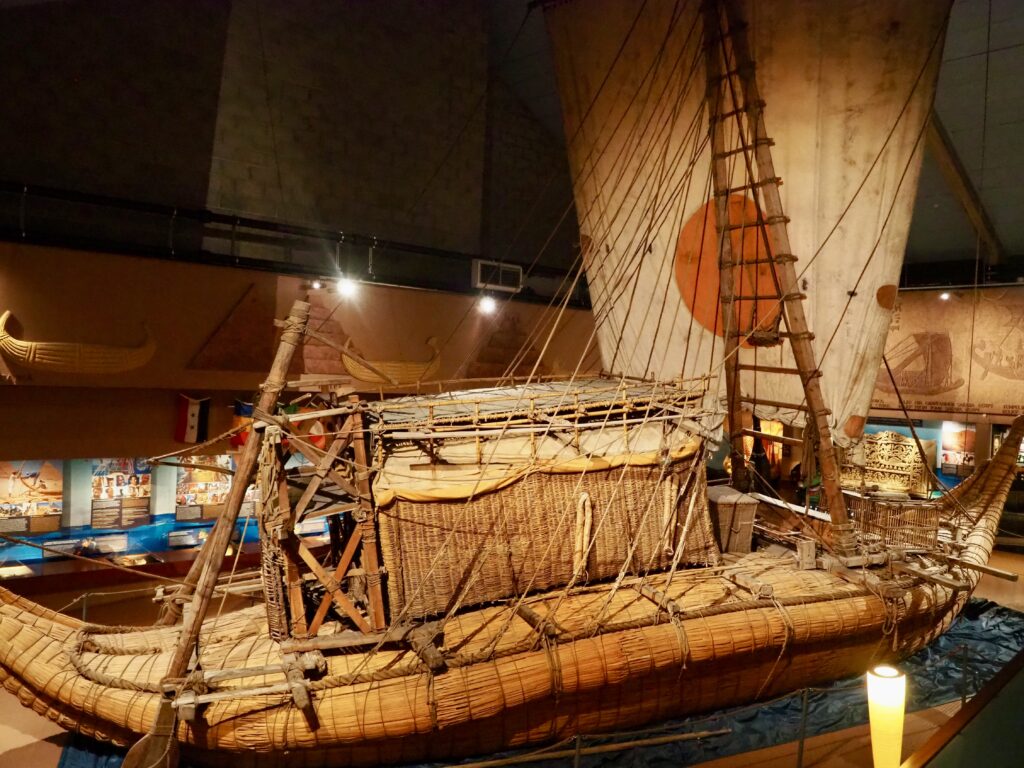
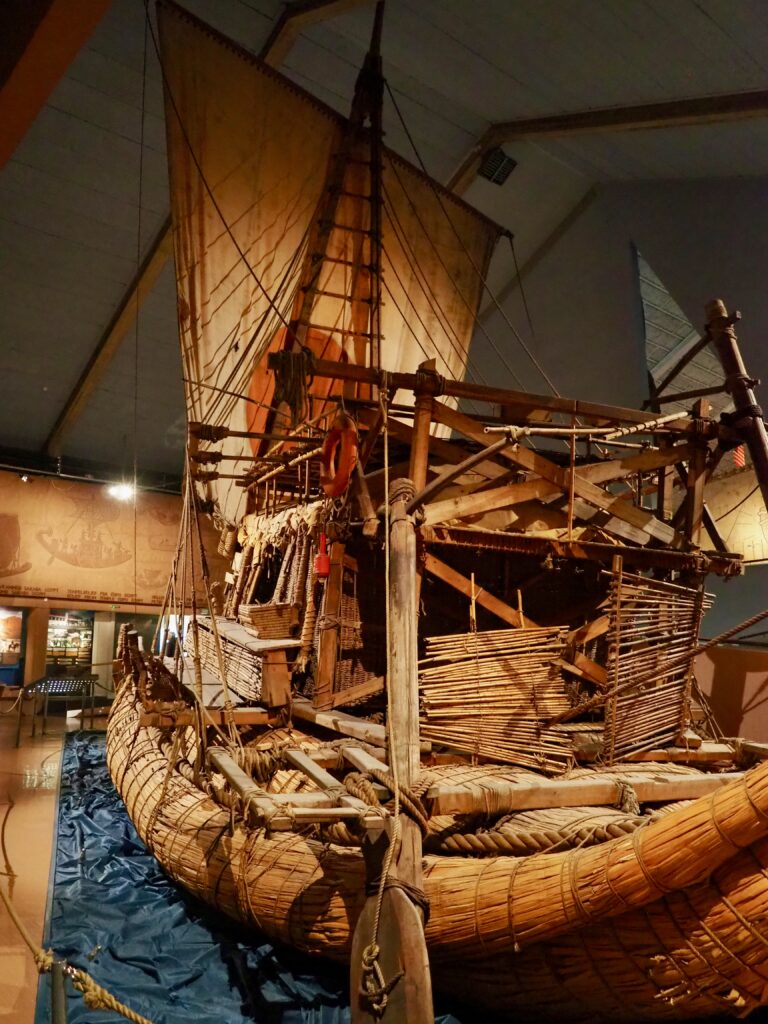
The museum also houses the Ra II, a boat made from papyrus reeds, as Heyerdahl imagined Ancient Egyptians could have crafted. The idea was to demonstrate that there could have been contact across the Atlantic in pre-Columbian times. He sailed this (after a previous failed attempt in the Ra) from North Africa to the Caribbean in 1970, taking 57 days to cross the Atlantic. The exhibit halls are lined with information that details the stories of both crossings, as well as the planning and construction beforehand. Both crossings are wild stories that neither of us had heard about before, so it was a super interesting museum!
A Weekend in Oslo
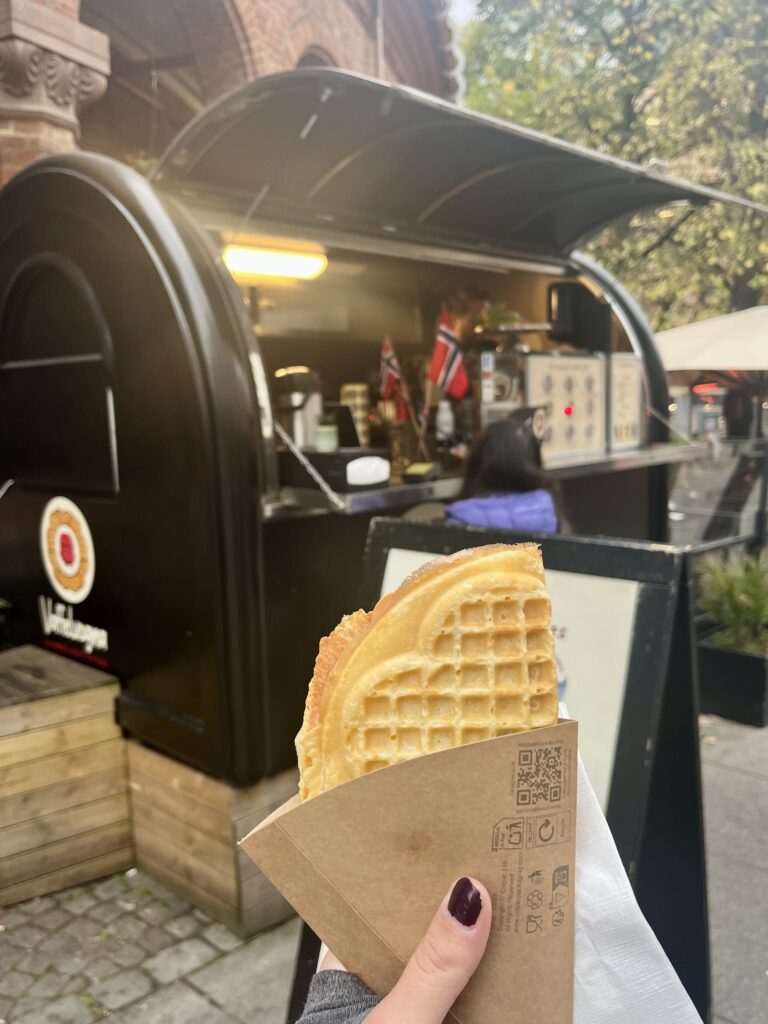
After catching the bus back to town, we made one last stop. On the recommendation of our tour guide from the first day, we stopped at Vaffelvogna on Karl Johans gate. We wanted to try the traditional combo of waffles with brown cheese, jam, and sour cream. It sounds bizarre – but it was actually delicious!
Then, we picked up our luggage and headed to the airport for our return flight to Edinburgh. Our weekend in Oslo was quite impromptu, though we did have enough time to plan the best use of our three days. And I think it’s safe to say that we were both very pleasantly surprised by the city! From going in not knowing much about it, we found Oslo to be safe, clean and friendly overall.
There are lots of museums that showed up first in our research, but there were plenty of other options beyond these, too. From strolling Aker Brygge to exploring the islands and cruising around the fjord, we had a good mix of activities. If we were to return, we’d definitely want to visit the floating saunas. Our timing was just unfortunate for our cycles on this occasion! But this was probably compensated for by the lovely weather we had for most of the weekend. Chilly but so sunny with that wintery golden glow for much of the day!